
Think of an email marketing agency as the expert crew you bring in to take the wheel of your email strategy, managing it from start to finish. They’ll handle everything from dreaming up killer campaigns and writing copy that actually converts, to keeping your subscriber lists healthy and digging into the performance data. In short, they become your dedicated email marketing department, laser-focused on bringing in revenue and building real customer loyalty.
Imagine your customer list isn't just a spreadsheet collecting dust, but a powerful revenue engine humming away for you, 24/7. That's the kind of shift a skilled email marketing agency can make happen. A lot of business owners think email marketing is just about sending a monthly newsletter, but honestly, that barely scratches the surface.
A proper agency moves way beyond simple email blasts. They're more like architects of customer communication, designing and building entire marketing ecosystems that are shaped around your specific business goals. This means creating smart, interconnected systems that guide customers through every single stage of their journey with your brand.
Let's get practical. An agency doesn't just "send emails"; they craft experiences.
At its heart, an email marketing agency's job is to turn a static list of contacts into a dynamic, revenue-generating asset. They mix strategy, tech, and a dose of creativity to build lasting relationships with your customers, right in their inbox.
In a world full of fleeting social media trends and algorithms that change on a whim, email is still one of the most reliable and direct ways to connect with your audience. An agency is the expert team that unlocks its true power, turning your email from a simple communication tool into a predictable source of business growth. And that frees you up to get back to what you do best: running your business.
When you bring an email marketing agency on board, you’re not just paying someone to hit ‘send’. Far from it. You’re investing in a team of specialists who manage a complex mix of strategy, technology, and creativity. Think of it less like hiring a mail courier and more like bringing in an architect to design a direct, profitable communication channel straight to your customers.
So, what are you actually getting for your money? While the specifics can vary, any top-tier agency builds its services around a few core pillars. Each one is designed to work with the others, turning your email list from a simple database into a reliable revenue-generating machine.
Here's a closer look at the key services an agency provides and the tangible impact they have on your business.
| Service Offered | What It Involves | Primary Business Benefit |
|---|---|---|
| Strategy & Planning | Deep-diving into your business goals, audience, and brand to build a comprehensive email calendar and campaign roadmap. | Ensures every email has a purpose, aligning your marketing efforts with tangible sales and growth objectives. |
| Creative Development | Crafting compelling copy and designing visually engaging, on-brand email templates that work flawlessly on any device. | Grabs subscriber attention, drives clicks, and creates a professional brand experience that builds trust. |
| Technical Management | Handling domain authentication, sender reputation monitoring, and list hygiene to ensure emails land in the inbox, not spam. | Maximises campaign reach and protects your sender reputation, ensuring your messages are actually seen. |
| Automation & Journeys | Building automated email sequences (welcome series, abandoned carts) triggered by customer behaviour. | Creates a "set-and-forget" revenue engine that nurtures leads and recovers sales 24/7 without manual effort. |
| Analytics & Reporting | Continuously tracking key metrics, analysing campaign performance, and providing clear, actionable reports. | Provides clear proof of ROI and identifies opportunities for improvement, making your email marketing smarter over time. |
By integrating these services, an agency moves beyond simply sending emails to building a holistic system designed for growth. Let's break down each of these areas a little further.
Before a single email gets written, everything begins with strategy. An agency's first job is to get under the hood of your business—understanding your goals, your audience, your brand voice, and where you sit in the market. They don't just ask what you want to send; they dig deeper to find out what you need to achieve.
This strategic groundwork informs a detailed campaign calendar. This isn't just a list of dates; it's a complete roadmap. It plots out your promotional pushes, seasonal campaigns, content newsletters, and nurturing sequences, all designed to deliver the right message to the right person at the right time.
Once the roadmap is clear, the creative team gets to work bringing it to life. This is a two-part process involving both the words on the screen and the way they look.
This simple map shows how an agency's core functions—strategy, automation, and sales—all connect to drive business growth.
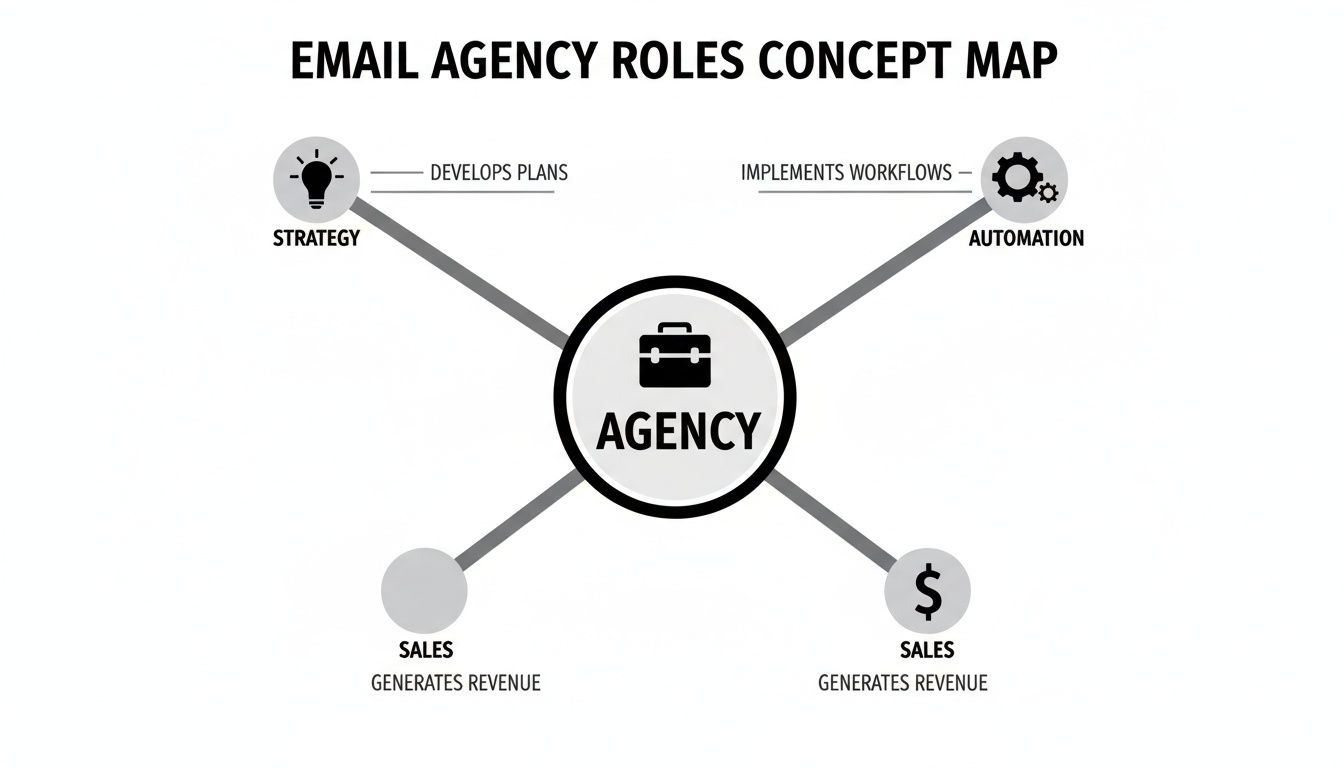
As you can see, every service, from the initial planning to the technical execution, is ultimately geared towards one thing: generating measurable sales for your business.
An incredible email is completely worthless if it lands in the spam folder. This is where the technical wizards at an email marketing agency really prove their value. Deliverability management is a critical, often-overlooked service that is purely focused on making sure your campaigns reach the inbox.
This involves authenticating your sending domain, keeping a close eye on your sender reputation, and performing regular list hygiene to weed out inactive or invalid addresses. It’s a constant process of optimisation to stay on the good side of giants like Gmail and Outlook. Here in Australia, getting this right pays off, with average open rates hitting 46.34% and click-through rates at 2.35%. With 55% of those opens happening on mobile, technical optimisation for every device isn't just a nice-to-have; it's essential.
This is where an agency can truly build a revenue engine that works for you 24/7. Marketing automation is all about creating automated email sequences, or "flows," that are triggered by specific customer actions. A key part of what an email marketing agency does involves mastering the various secure email marketing automation tools available.
Key Takeaway: Automation isn't about sending robotic, impersonal messages. It's about delivering hyper-relevant, timely communication at scale, making each customer feel like they're having a one-on-one conversation with your brand.
Some of the most common and profitable automation flows include:
Choosing the right platform is the foundation for powerful automation. Our guide to the best email marketing software is a great place to start understanding the options out there.
Finally, a crucial service is the ongoing measurement and reporting. An agency doesn't just "set and forget." They constantly track key performance indicators (KPIs) to figure out what’s working and what isn't. They dive into the data from every campaign to sharpen the strategy, tweak the creative, and improve your results over time. This data-driven approach is what ensures your investment delivers a real, tangible return.
Looking at the cost of an email marketing agency might feel like a big line item on your budget, but it’s better to think of it as a strategic investment. The conversation quickly shifts from cost to return, especially when you see the kind of results a specialist team can pull off—results often impossible for an in-house team to hit on their own. It's all about unlocking the real financial potential sitting in your subscriber list.

This impressive return is driven by a simple fact: email marketing agencies in Australia thrive because the channel itself offers a nearly unbeatable ROI. On average, it delivers $42 for every $1 spent. That success comes from email's unique power to land directly in a customer's personal inbox, building trust without being at the mercy of some social media algorithm. In fact, studies show email is 40 times more effective at winning new customers than platforms like Facebook or Twitter.
One of the first returns you'll notice is sheer efficiency. When you partner with an agency, you instantly get a whole team of specialists—strategists, copywriters, designers, and deliverability experts—without the headache and overheads of hiring, training, and keeping them on your payroll.
Think about it. Your marketing manager is probably a generalist, juggling social media, SEO, content, and a dozen other things. An agency, however, lives and breathes email.
This operational efficiency is the first layer of your ROI, giving you back your most valuable resource: your team's time.
Beyond just saving you time, an agency's main job is to get you better results. They do this by applying battle-tested strategies and a relentless focus on data, turning good campaigns into absolute winners.
An agency’s value isn't just in sending emails; it's in their ability to systematically improve performance over time. Their experience with hundreds of campaigns across various industries gives them a unique perspective on what works.
For example, an agency can dramatically improve the key metrics that feed directly into your revenue. They can lift open rates with expert subject lines, boost click-through rates with compelling design, and ultimately drive more conversions.
By continuously testing and refining every part of your campaigns, they ensure your email channel is not just busy but consistently profitable. This focus on small, steady gains is what turns your email list into a predictable source of income, directly impacting your bottom line and increasing the customer lifetime value of every single subscriber.
Picking an email marketing agency isn't like just hiring another supplier; it’s about finding a genuine partner who’ll help grow your business from the inside out. But with so many options out there, it’s easy to feel a bit lost.
Not all agencies are built the same. The right choice can be a game-changer for your marketing, while the wrong one can end up being a massive drain on your time and budget. To make a smart decision, you need to look past the fancy sales pitches and dig into what really matters: their strategic chops, their track record, and how they operate.
A great agency doesn't just blast out emails. They become an extension of your own team, genuinely invested in seeing you win.
First things first: you need to suss out their strategic mindset. A portfolio full of pretty designs is one thing, but it’s completely useless without a solid strategy driving it. The real experts won’t start by showing you templates; they’ll start by asking you some tough questions about your business.
They should be keen to get their heads around your:
If an agency launches straight into talk about open rates and click-throughs without understanding your big-picture goals, that’s a huge red flag. They need to show you exactly how their email activities will help solve your business challenges and deliver real, measurable results.
The best email marketing partners are strategists before they’re anything else. They tie every single campaign back to a bigger business objective, making sure their work isn't just creative, but commercial.
Look for a partner who can lay out a clear vision for your email program for the next 6 to 12 months. It shows they're thinking about long-term, sustainable growth, not just one-off projects.
Once you’re happy with their strategic thinking, it’s time to see if they’ve got the runs on the board. Case studies and client testimonials are your best friends at this stage. Don’t just skim them—really dig in and see how relevant they are to your own business.
An agency that’s brilliant for e-commerce brands might not be the right fit for a B2B software company. You need to find evidence that they’ve tackled challenges similar to yours. If they’ve worked in your industry before, they’ll already have a head start on understanding the market, your customers, and what the competition is up to.
When you’re looking at case studies, ask sharp questions:
Getting into the weeds like this helps you sort the agencies that deliver real results from those who just talk a good game.
An agency’s brilliant strategy and creative ideas are only as good as their technical ability to actually make it all happen. The world of email marketing runs on a heap of different software, known as Email Service Providers (ESPs).
It’s vital to know which platforms an agency knows inside and out. It’s worth asking which of the best email marketing platforms they work with and why. The tools they use can have a massive impact on what you can achieve, from complex automations to how well it all connects with your other systems, like your CRM or online store.
Make sure they can handle the nitty-gritty technical side of things, like deliverability, domain authentication, and keeping your subscriber list clean. An agency that can’t keep your emails out of the spam folder isn’t a partner you can afford to have.
Choosing the right agency partner requires a methodical approach. This checklist will help you cut through the noise, compare your options side-by-side, and spot any potential issues before you commit.
| Evaluation Criteria | What to Look For | Red Flag to Avoid |
|---|---|---|
| Strategic Approach | They ask deep questions about your business goals and audience before talking tactics. | Jumps straight into discussing tools, templates, and pricing without understanding your business. |
| Industry Experience | Relevant case studies and testimonials from businesses like yours, with clear results. | Vague success stories or a portfolio that doesn't align with your industry (e.g., all B2C when you're B2B). |
| Technical Expertise | Deep knowledge of major ESPs, deliverability best practices, and integrations. | Unfamiliar with your current tech stack or unable to explain how they handle technical issues like spam filtering. |
| Reporting & Transparency | A clear process for reporting on key metrics and a willingness to share access to data. | Hazy on what they measure or unwilling to provide direct access to analytics platforms. |
| Communication Style | A dedicated point of contact and a proactive, collaborative communication rhythm. | Poor follow-up during the sales process or a one-size-fits-all communication plan. |
By using this framework, you can move beyond a gut feeling and make an informed decision based on evidence. It ensures the agency you choose is truly aligned with your vision and equipped to help you succeed.
When you start exploring working with an email marketing agency, one of the first things you'll bump into is how they charge for their services. It's not a one-size-fits-all situation, and understanding the different paths you can take is key to matching your budget with the results you’re after.
Think of it like buying a car. You could lease it for a fixed monthly fee, buy it outright for a specific project (like a road trip), or even work out a deal where payments depend on how much you use it. Agency pricing follows a similar logic, with each model built for different business needs and goals.
The most common arrangement you'll find is the monthly retainer. This is a straightforward, fixed fee you pay each month for a clearly defined set of services. It’s like putting the agency’s whole team—strategists, copywriters, designers, and tech experts—on your team, month in and month out.
This model is perfect for businesses looking for a genuine partnership. It lets the agency get right into the nuts and bolts of your marketing, handling everything from building your campaign calendar and automation sequences to constantly testing and tweaking things for better results.
A few perks of the retainer model:
The main thing to consider here is commitment. Retainers work best when you’re ready to invest in a serious, long-term email marketing program.
What if you just need help with one specific thing? That’s where project-based pricing comes in. You pay a single, upfront fee for a well-defined project with a clear start and finish line. This could be anything from building a complex welcome series to designing a new set of email templates for a product launch. It’s a great way to tackle a specific need or even just test the waters with an agency without locking into a long-term contract.
A more modern, results-driven option is the performance-based model. With this approach, the agency’s fee is directly linked to the results they get for you—like the revenue they generate from your email campaigns or the number of qualified leads they bring in.
This can be a really appealing option because the agency only makes more money when you do. It often works as a hybrid, with a smaller base retainer plus a percentage of the revenue they generate. It requires rock-solid tracking and a clear agreement on what counts as a win, but it’s a powerful way for an agency to show they’ve got real skin in the game.
So, how do you know if your investment in an email marketing agency is actually paying off? It’s easy to get swept up in the excitement of a high open rate, but the real story of success goes much, much deeper. True results aren’t measured by how many people see your emails, but by how many take meaningful action that puts money in your pocket.

A professional agency knows to shift the focus away from these surface-level "vanity metrics" and onto the key performance indicators (KPIs) that genuinely reflect business growth. Think of it this way: you could count how many people walk past your shop window, or you could count how many come inside and actually buy something. The latter is what keeps the lights on.
This data-first approach is the bedrock of any email marketing strategy that's built to last. It’s how an agency makes sharp, strategic tweaks to constantly improve your campaigns over time.
An open rate just tells you how many subscribers glanced at your email. While a killer subject line can certainly give that number a boost, it doesn’t guarantee anyone actually engaged or spent a dollar. A skilled email marketing agency will be far more interested in the metrics that reveal your subscribers' intent and actions.
Here are the KPIs that really matter:
By zeroing in on these action-based metrics, an agency gets a crystal-clear picture of what's working with your audience and what's driving them to convert. That insight is gold when it comes to optimising future campaigns for maximum impact.
At the end of the day, any marketing you do should be about generating revenue. An experienced agency connects their work directly to financial metrics to show you a clear return on your investment. This means looking beyond single campaigns to the overall financial health of your email channel.
Here are the key financial and list health metrics they'll track:
Getting your head around these digital marketing performance metrics is fundamental to building a profitable strategy. An agency uses this data to make smarter decisions, ensuring every single email contributes directly to your bottom line and strengthens the relationship you have with your customers.
Deciding to bring an email marketing agency into your corner is a big move, and it's only natural to have a few questions before you shake hands. Getting your head around the practical side of how an agency operates is the best way to make a decision you feel good about. Let's clear up a few of the most common queries we hear from businesses.
This is usually the first question on everyone's lips, and the honest-to-goodness answer is: it depends. You might get some quick wins from a few initial tweaks, like a jump in your open rates, but the results that really move the needle take time to build. A good agency is focused on sustainable growth, not just flashy, short-term spikes.
Realistically, you should expect to see a clear, positive trend within three to six months. This gives the agency enough breathing room to do the job properly:
Think of it like planting a garden. You don't get a full harvest overnight. But with consistent, expert attention, you’ll see steady growth that eventually delivers a brilliant return.
Absolutely, platforms like Mailchimp or Klaviyo are incredibly powerful. But a tool is only as good as the person using it. The real difference between going DIY and hiring an email marketing agency boils down to three things: strategy, expertise, and time.
An agency isn't just an extra pair of hands to click buttons in the software. They're strategists. They understand the subtle art of email deliverability, the science behind copywriting that converts, and the technical nuts and bolts of advanced segmentation and automation. They bring years of experience from working across dozens, if not hundreds, of different accounts—giving them insights you simply can't get from tinkering with a tool on your own.
Hiring an agency is about getting an expert to maximise the return from your software investment. It's the difference between owning a high-performance race car and having a professional driver who knows exactly how to win the race with it.
Of course. Any professional agency worth its salt will be platform-agnostic, meaning they can adapt to the tech you're already using. Whether you're on a mainstream Email Service Provider or a more niche platform, their first job is to get under the hood of your current setup and figure out how to make it purr.
They'll also give your existing customer list a full health check. They'll find opportunities to segment your audience and re-engage dormant subscribers without ever asking you to start again from scratch. Their goal is to enhance what you've already built, making your current assets work harder and smarter for your business.
Ready to see what a dedicated team of experts can do for your email marketing? At Virtual Ad Agency, we build revenue-driving email strategies that turn your subscriber list into your most valuable asset. Learn more about our email marketing services.

 previous