
Finding the best email marketing software for your business is crucial for building customer relationships and driving growth. An effective platform does more than just send bulk emails; it helps you segment your audience, personalise your messaging, automate campaigns, and analyse performance to refine your strategy. With dozens of options available, each with unique strengths and specialisations, choosing the right one can feel overwhelming.
This guide simplifies that decision. We've analysed the top email marketing platforms on the market, moving beyond marketing claims to provide a practical, in-depth comparison. Whether you're a small business owner just starting out, an e-commerce store needing sophisticated automation, or a large enterprise requiring an all-in-one marketing hub, this resource is organised to help you identify the ideal solution for your specific needs.
Here, you'll find a detailed breakdown of 12 leading platforms, including Mailchimp, ActiveCampaign, HubSpot, and Klaviyo. For each tool, we provide:
We've also included screenshots for a visual feel of the user interface and direct links to each platform to streamline your research. Our goal is to equip you with the insights needed to confidently select the email marketing software that will best support your business objectives and deliver measurable results. Let’s dive into the options.
Mailchimp is a powerhouse in the email marketing world, renowned for its user-friendly interface and comprehensive feature set that caters especially well to small and midsize businesses. It has long been a go-to choice for those just starting with email marketing, offering an intuitive platform that simplifies creating, sending, and analysing campaigns. This blend of accessibility and robust functionality makes it one of the best email marketing software options available.
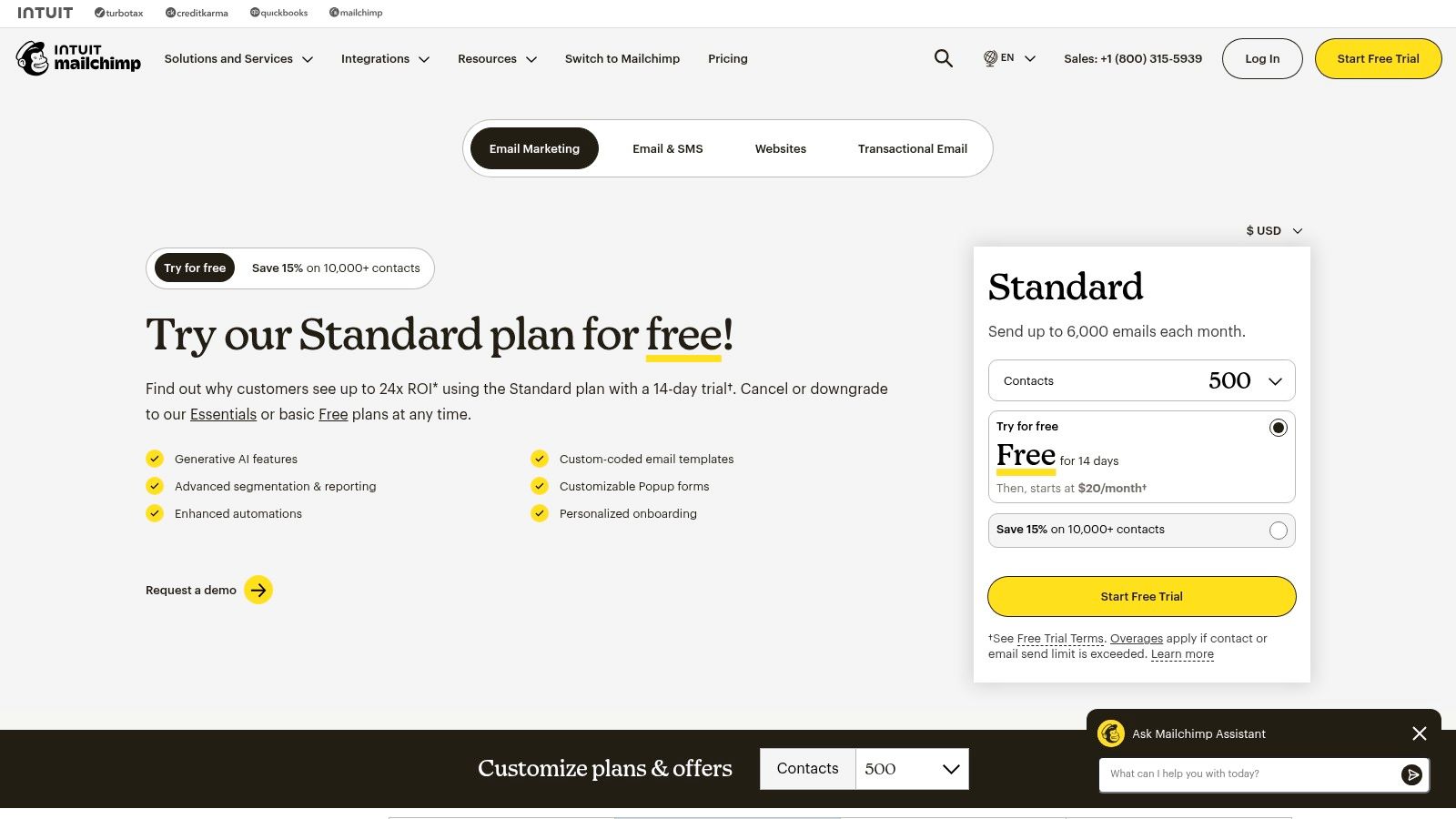
What makes Mailchimp stand out is its low barrier to entry combined with powerful, scalable tools. The platform’s drag-and-drop editor is exceptionally easy to master, allowing users to design professional-looking emails without needing to know any code. As your needs grow, you can leverage its advanced segmentation, A/B testing, and sophisticated automation workflows to deliver highly personalised content to your audience. Agencies often favour it for its reliability and feature depth; you can learn more about how Mailchimp supports email marketing for agencies here.
Mailchimp’s feature set is designed for growth, offering tools for every stage of your marketing journey.
Pros:
Cons:
Campaign Monitor is a strong contender in the email marketing space, carving out a niche for itself with a focus on beautiful design and simplicity. Originating in Australia, the platform is particularly favoured by teams who prioritise polished, professional-looking emails without a steep learning curve. Its straightforward approach to list management and campaign creation makes it an excellent choice for businesses that need powerful tools without unnecessary complexity.
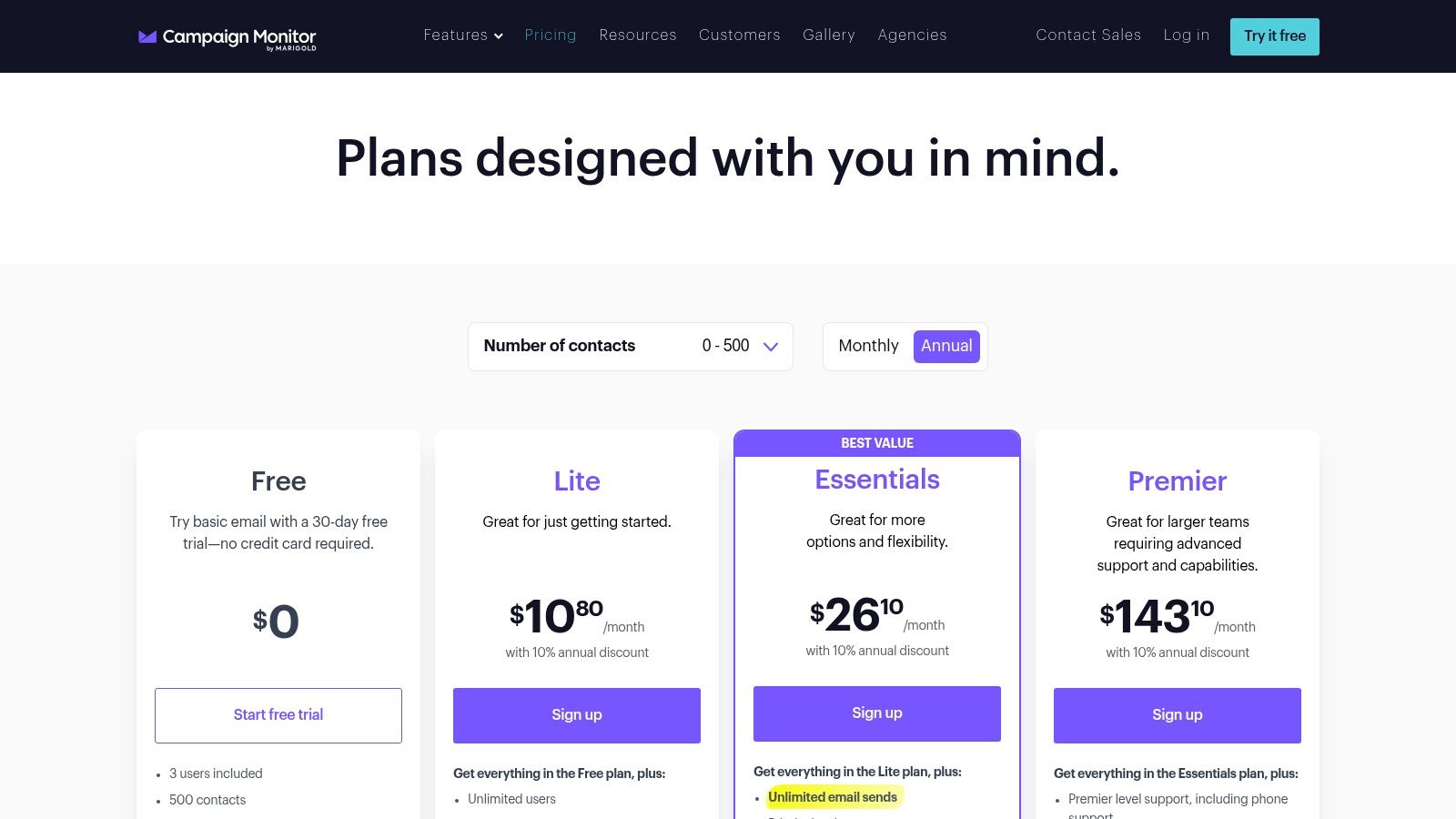
What makes Campaign Monitor stand out is its commitment to design elegance and user experience. The drag-and-drop builder is exceptionally intuitive, and its templates are consistently praised for their professional aesthetic. For organisations keen on maintaining brand consistency, the template locking feature is a significant benefit, allowing designers to set brand guidelines that other team members cannot override. This blend of creative freedom and brand control positions it as one of the best email marketing software options for design-conscious teams.
Campaign Monitor’s features are built around ease of use and impactful, visually-driven campaigns.
Pros:
Cons:
ActiveCampaign is a customer experience automation platform that excels at combining email marketing, sophisticated automations, and an optional CRM. It is designed for businesses that want to move beyond simple newsletters and implement highly targeted, behaviour-driven communication strategies. This powerful combination of features makes it a top contender for the title of best email marketing software for businesses focused on automation.
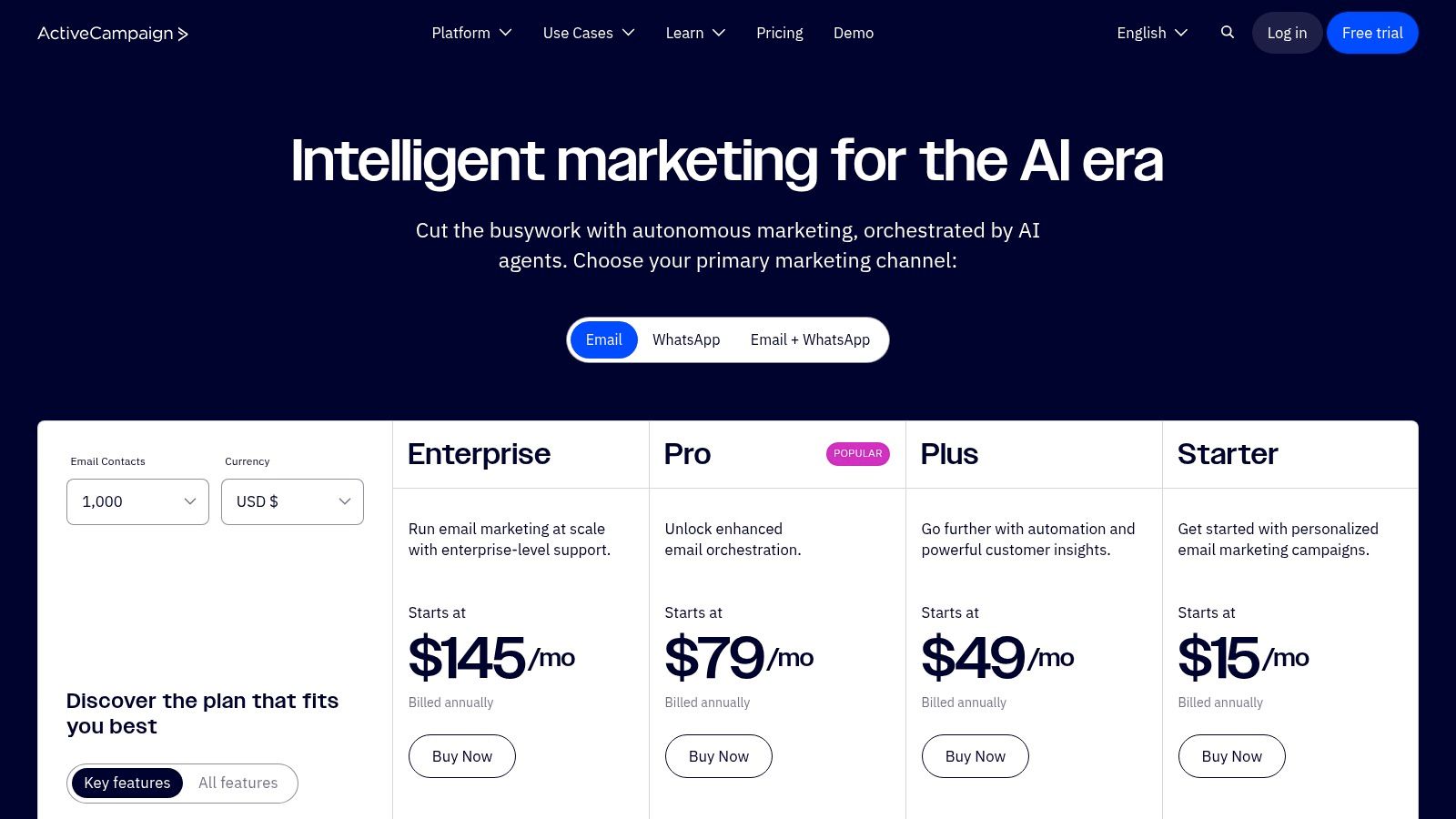
What truly sets ActiveCampaign apart is the depth of its automation capabilities, which are accessible even on lower-tier plans. Its visual automation builder allows you to create complex workflows based on site visits, email engagement, and custom events. This enables a level of personalisation that is typically reserved for enterprise-level tools, allowing you to nurture leads and engage customers with precision. To get a deeper understanding of this technology, you can learn more about what marketing automation is and how it works.
ActiveCampaign’s feature set is built to support complex customer journeys and sales processes.
Pros:
Cons:
HubSpot Marketing Hub is an all-in-one marketing automation platform where email is a core component, deeply integrated with a powerful CRM. It’s designed for businesses that want a single source of truth for all customer interactions, from marketing and sales to service. This unified approach allows for incredibly sophisticated personalisation and segmentation, making it one of the best email marketing software choices for companies focused on the entire customer lifecycle.
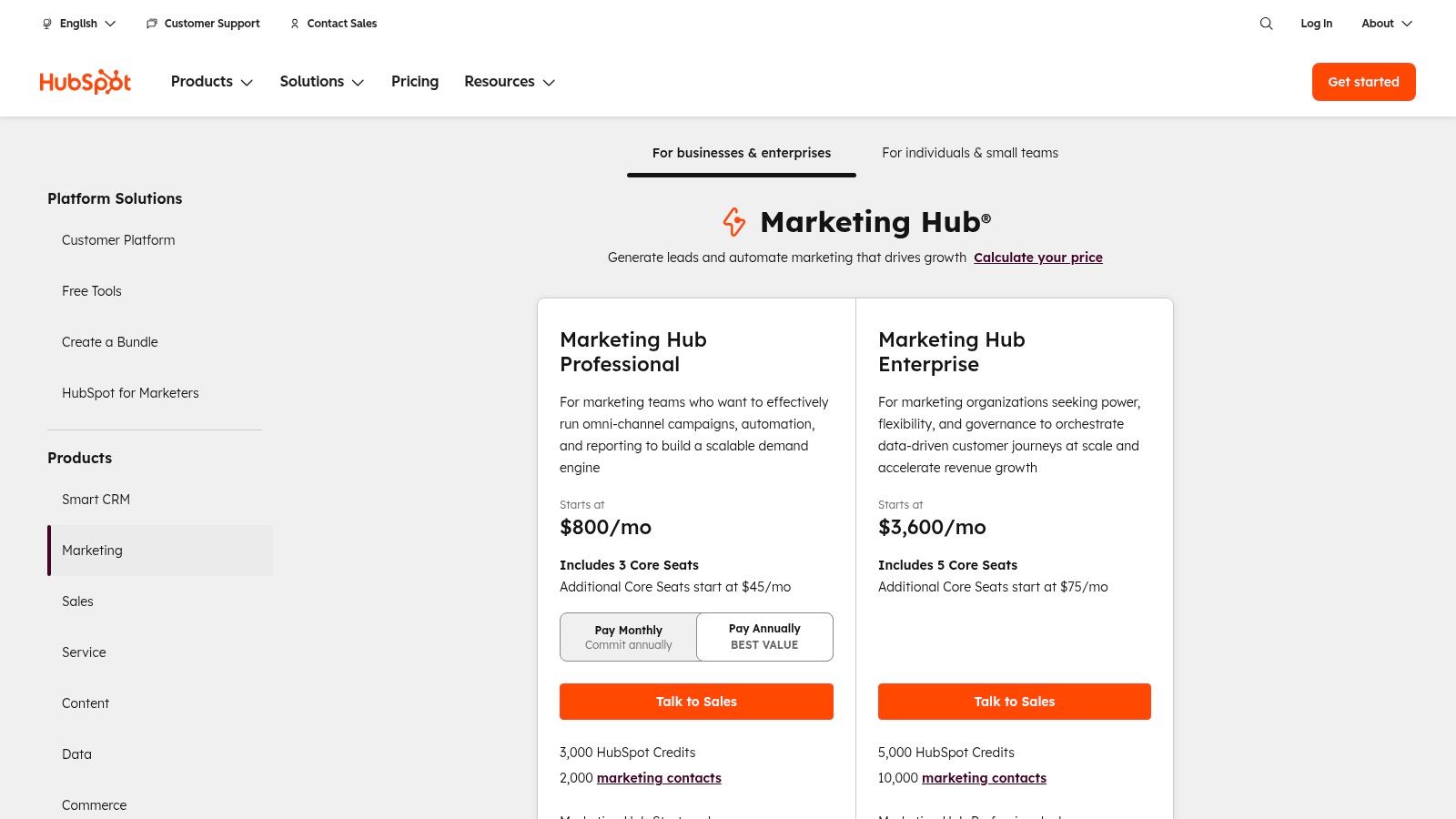
What makes HubSpot stand out is its ability to connect email performance directly to revenue and customer behaviour. Because every email interaction is tracked within the CRM, you can create automation workflows based on website activity, deal stages, or support tickets. The platform’s drag-and-drop editor and robust A/B testing capabilities are top-notch, but its true power lies in using the rich CRM data to send the right message to the right person at exactly the right time, moving beyond simple campaigns to build comprehensive inbound marketing funnels.
HubSpot's features are organised in tiers, scaling from basic email tools to a full enterprise-level marketing suite.
Pros:
Cons:
Brevo, formerly known as Sendinblue, stands out in the email marketing landscape with its unique pricing model and all-in-one marketing suite. Unlike many competitors that charge based on contact list size, Brevo focuses on email volume, making it an incredibly cost-effective solution for businesses with large audiences but moderate sending frequencies. This approach, combined with a powerful set of multichannel tools, positions it as one of the best email marketing software options for businesses seeking more than just email.
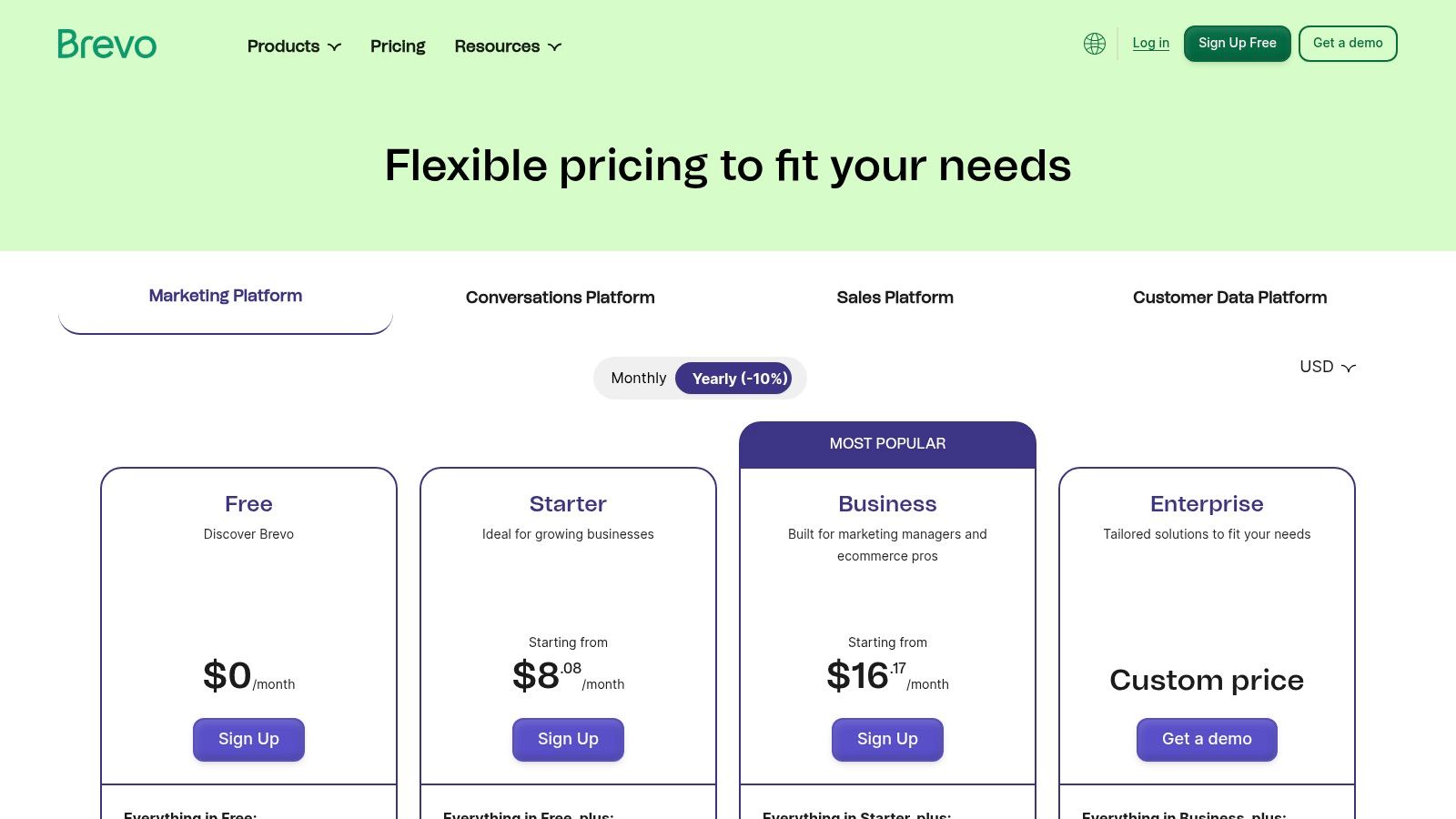
What makes Brevo particularly compelling is its integration of various communication channels into a single platform. Beyond a robust email editor and automation workflows, it offers SMS marketing, WhatsApp campaigns, live chat, and push notifications. This unified functionality allows businesses to create cohesive, cross-channel customer journeys without needing to juggle multiple subscriptions. Its generous free plan also provides an excellent entry point for new businesses to test its comprehensive features before committing.
Brevo’s feature set is designed to support a complete marketing and sales funnel, extending far beyond traditional email campaigns.
Pros:
Cons:
MailerLite has carved out a niche as a streamlined and cost-effective email marketing solution, appealing particularly to creators, freelancers, and small businesses. It combines an uncluttered interface with a surprisingly robust feature set that extends beyond email into website building and digital product sales. This focus on simplicity and value makes it one of the best email marketing software choices for those who need powerful tools without a steep learning curve or high price tag.
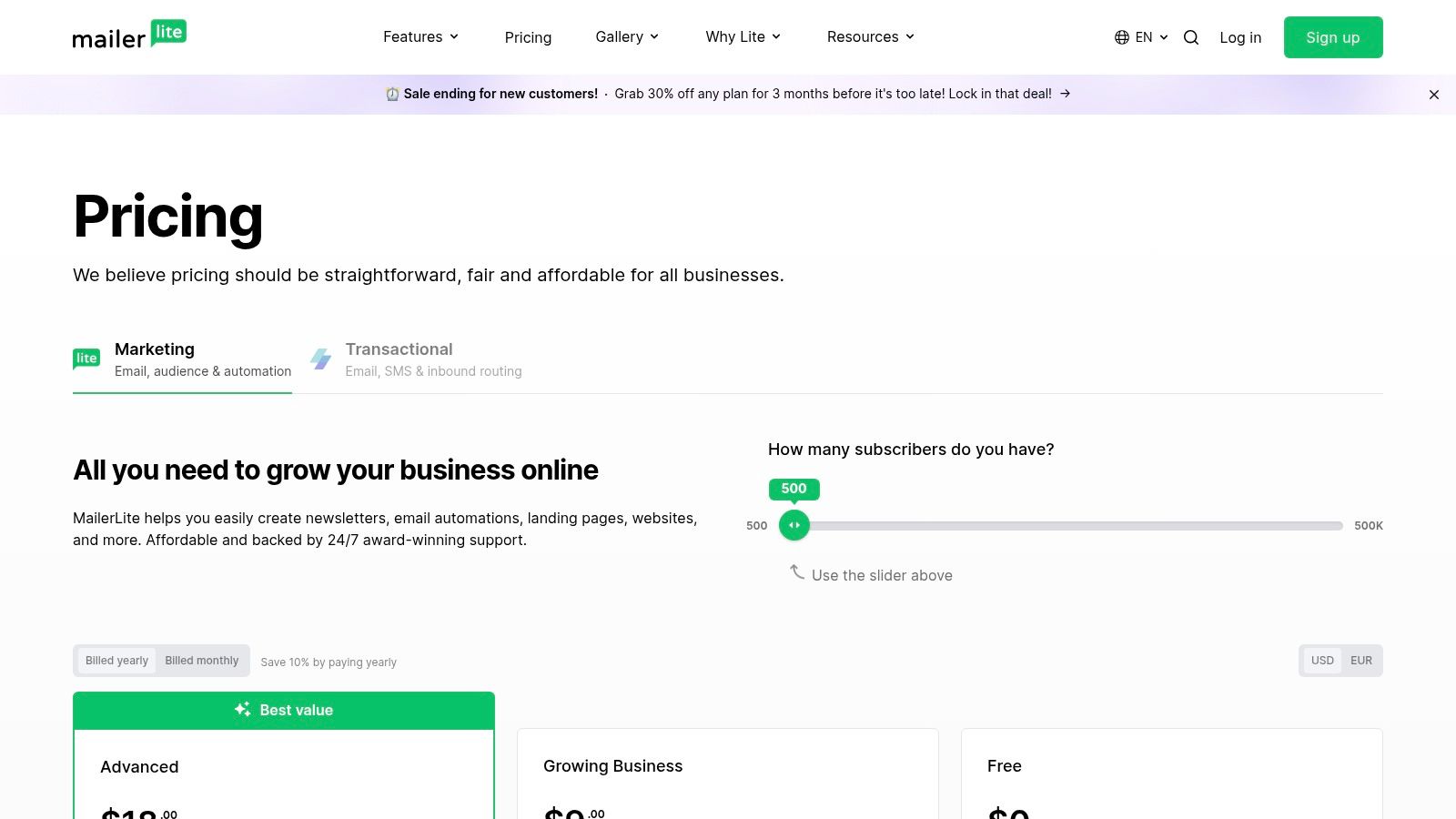
What makes MailerLite a standout is its commitment to providing an all-in-one marketing platform at an accessible price point. Its drag-and-drop editor is exceptionally intuitive, allowing for quick creation of emails, landing pages, and even full websites. Beyond the basics, it offers advanced features like sophisticated automation workflows and dynamic content, which help users deliver a personalised experience to their audience. The platform’s clean design ensures that even complex campaigns are easy to set up and manage.
MailerLite’s features are organised to support growing businesses, offering more than just email.
Pros:
Cons:
Constant Contact has carved out a niche as a reliable and supportive platform, making it one of the best email marketing software choices for small businesses, non-profits, and event organisers. Its strength lies in combining an accessible, straightforward interface with robust customer support, including phone and personalised onboarding assistance. This focus on user guidance helps newcomers quickly get their campaigns off the ground without a steep learning curve.
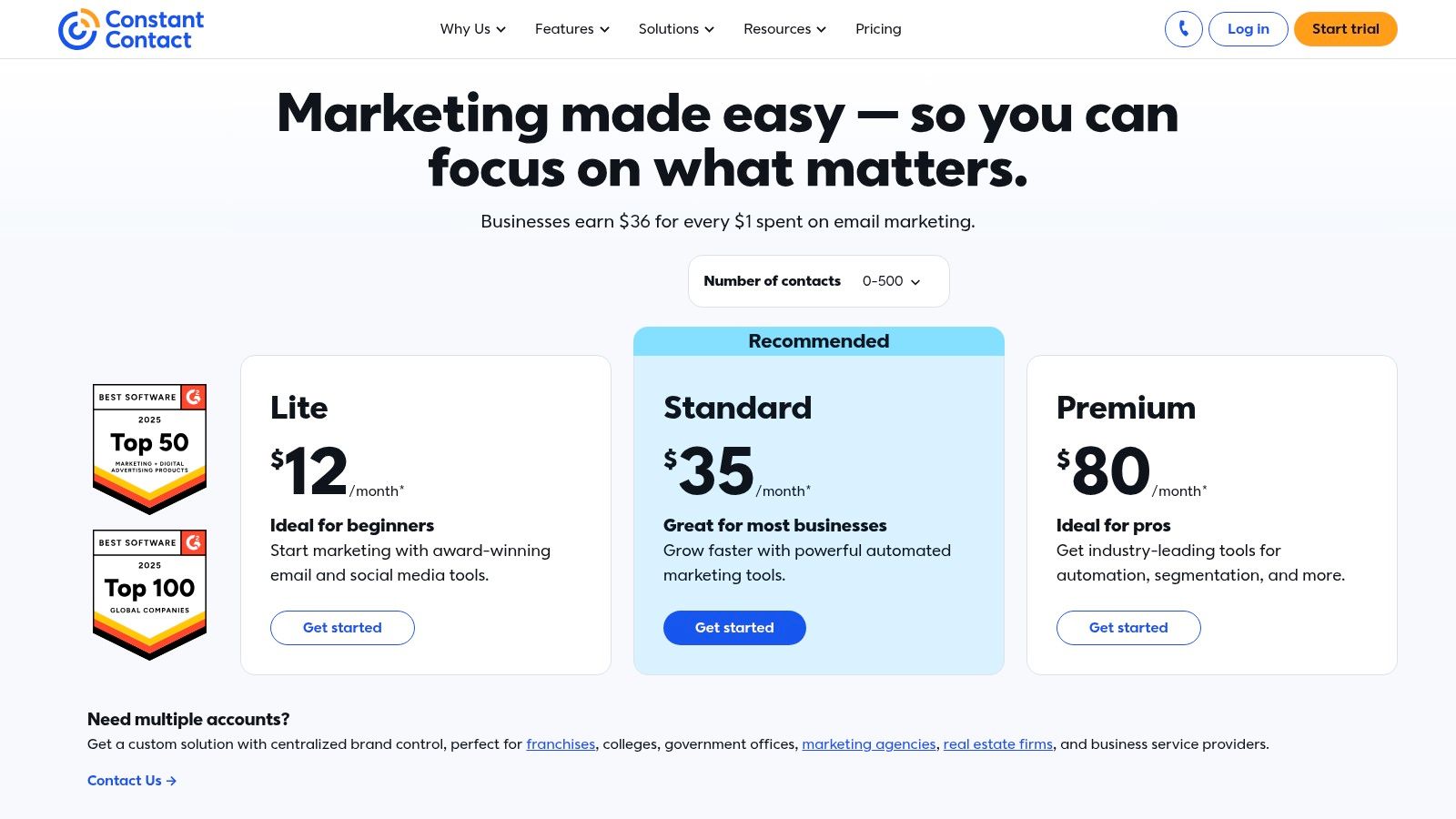
What sets Constant Contact apart is its integrated toolset that extends beyond just email. The platform includes features for event management, social media posting, surveys, and polls, allowing businesses to centralise several marketing activities. This all-in-one approach is ideal for teams wanting to manage contacts and promotions from a single dashboard. For those looking to elevate their campaigns further, there are helpful tips to supercharge your email marketing with Constant Contact by incorporating interactive elements.
Constant Contact’s features are built to support the marketing needs of growing businesses.
Pros:
Cons:
GetResponse positions itself as more than just an email platform; it's a comprehensive, all-in-one marketing solution designed for businesses looking to centralise their digital efforts. It merges powerful email marketing capabilities with conversion funnels, landing pages, webinar hosting, and AI-driven tools, offering a complete suite to attract, engage, and convert an audience. This integrated approach makes it one of the best email marketing software choices for companies wanting to streamline their marketing technology stack.
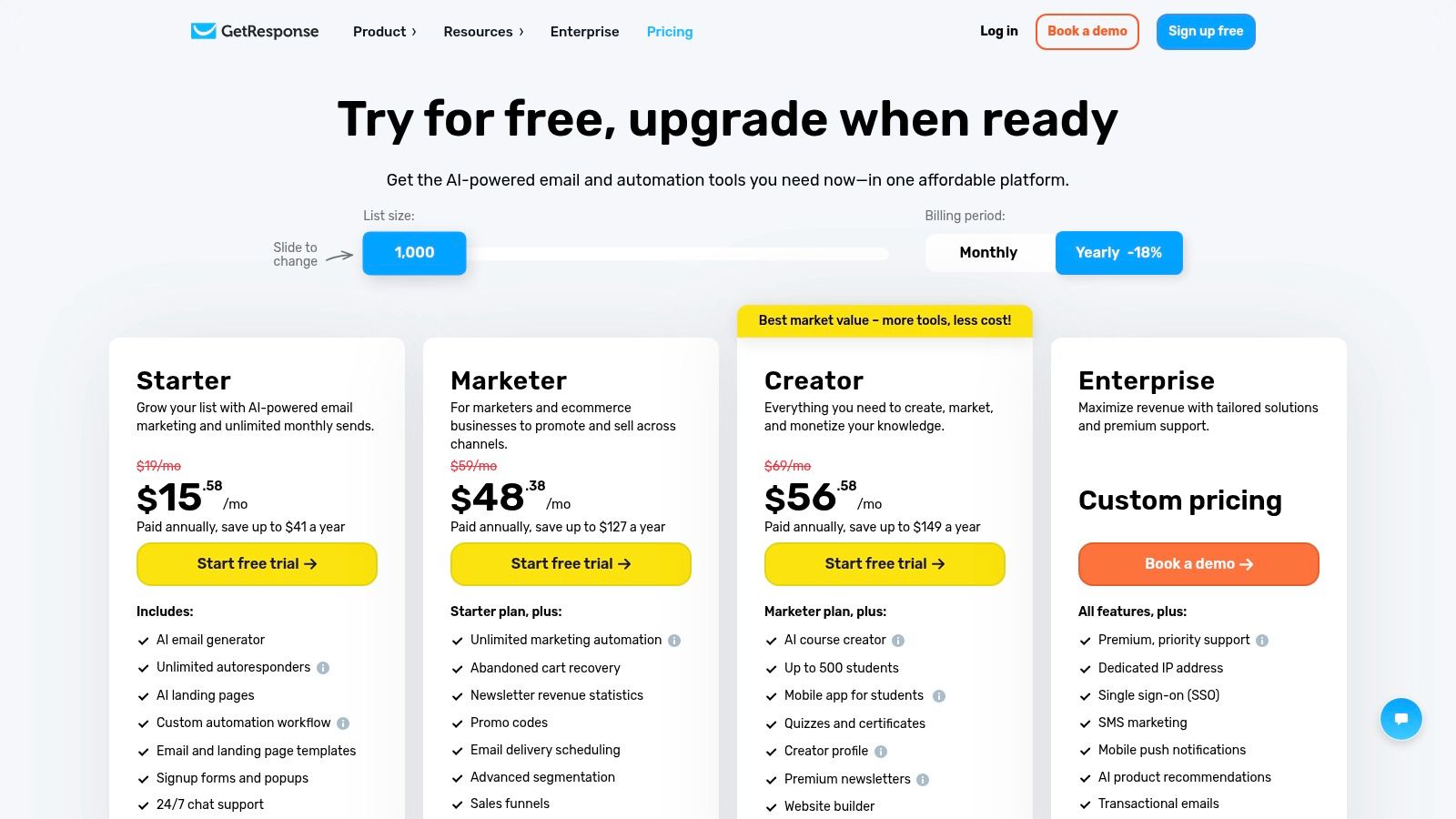
What makes GetResponse a standout is its ability to support the entire customer journey from a single dashboard. Users can build a contact list with landing pages, nurture leads with sophisticated automation, and even sell products or host paid webinars without needing multiple subscriptions. Its unlimited email sends on paid plans is a major drawcard, allowing businesses to scale their communication efforts without worrying about hitting a send cap. The platform is robust enough for seasoned marketers yet organised in a way that newcomers can progressively master its advanced features.
GetResponse provides a tiered feature set that expands as your marketing needs become more sophisticated.
Pros:
Cons:
Klaviyo is an undisputed leader in the ecommerce marketing space, offering a unified platform built specifically to drive revenue for online stores. It excels by integrating deeply with major ecommerce platforms like Shopify and BigCommerce, pulling in rich customer data to power highly targeted, event-based automation. This focus on commerce makes it arguably the best email marketing software for businesses whose primary goal is to convert sales directly from their marketing efforts.
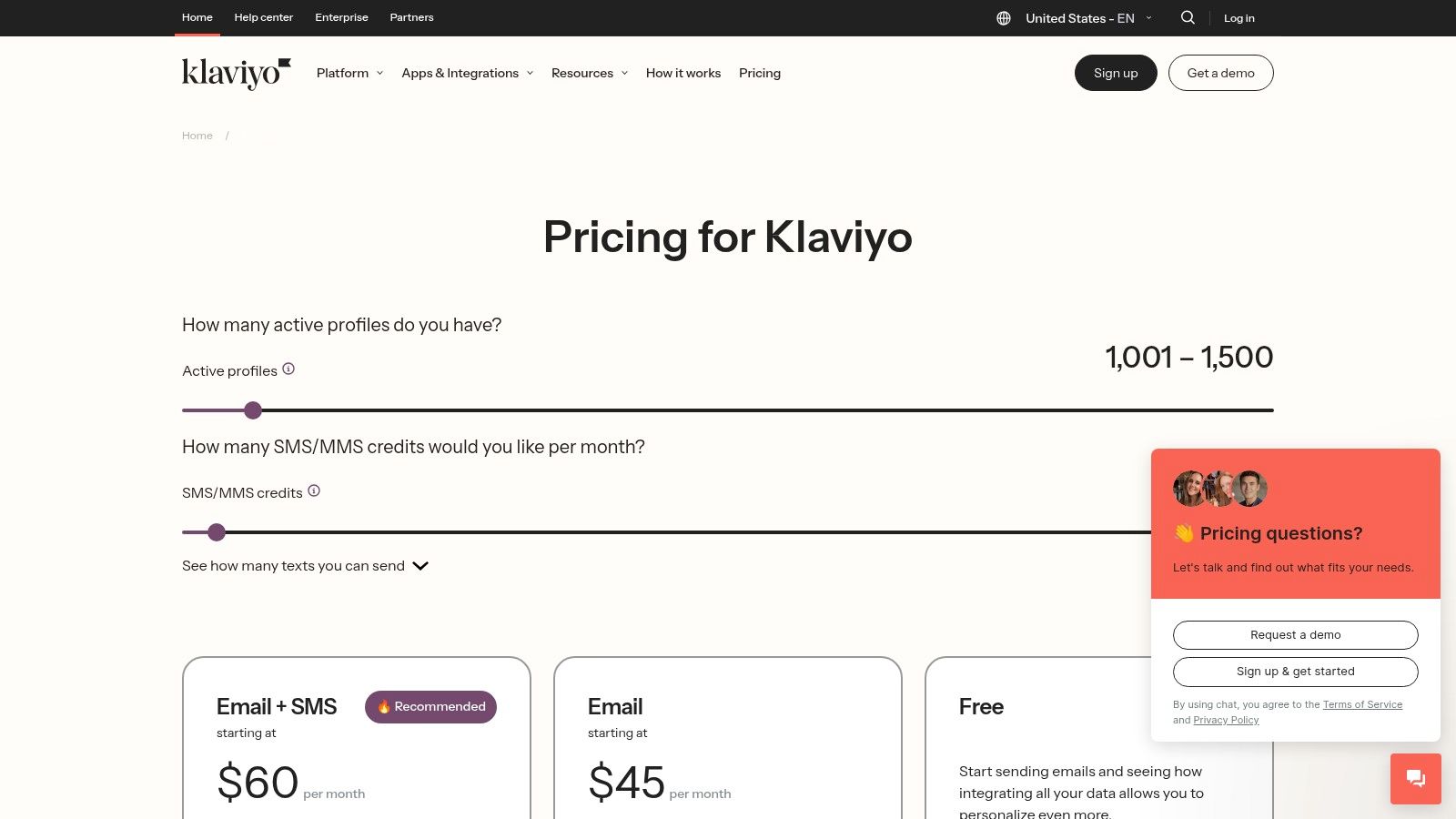
What truly sets Klaviyo apart is its powerful, data-driven approach that combines email, SMS, WhatsApp, and reviews into a single, cohesive strategy. Its segmentation and automation capabilities are exceptionally advanced, allowing you to create complex workflows based on customer behaviour like abandoned carts, products viewed, or past purchase history. For online retailers looking to personalise the customer journey and precisely measure the revenue generated from every message, Klaviyo provides an unparalleled level of control and insight.
Klaviyo’s features are organised to help ecommerce brands build relationships and drive sales across multiple channels.
Pros:
Cons:
Omnisend is a dedicated email and SMS marketing automation platform built specifically for ecommerce businesses. It excels at driving sales by deeply integrating with major platforms like Shopify, BigCommerce, and WooCommerce. Its key strength lies in providing powerful, sales-focused automations that combine multiple channels, such as email, SMS, and push notifications, into a single, cohesive workflow, making it one of the best email marketing software choices for online retailers.
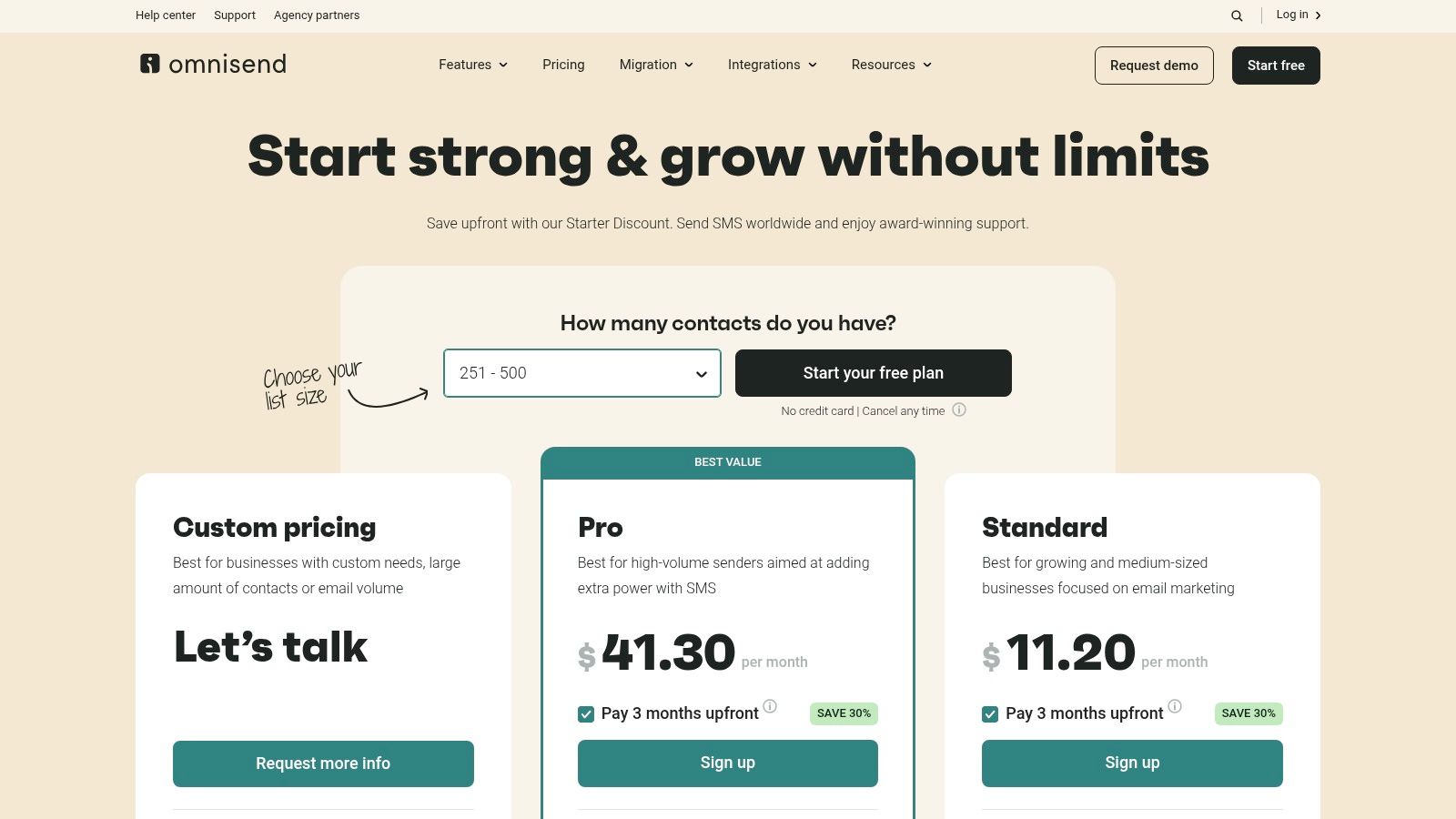
What truly sets Omnisend apart is its laser focus on ecommerce functionality. The platform comes loaded with pre-built automation workflows designed for common online retail scenarios like cart abandonment, welcome series, and post-purchase follow-ups. This allows store owners to quickly implement sophisticated, revenue-generating campaigns without needing extensive technical knowledge. By centralising communication, it enables a true omnichannel strategy; you can discover more about what omnichannel marketing is here. The platform's revenue-centric reporting also provides clear insights into how marketing efforts directly impact sales.
Omnisend’s features are organised to help ecommerce brands convert visitors into loyal customers.
Pros:
Cons:
Drip is an ecommerce-focused email automation platform designed for growing online stores. With contact-based pricing and a rich automation builder, it delivers highly targeted workflows that adapt to customer behaviour and product catalogues.
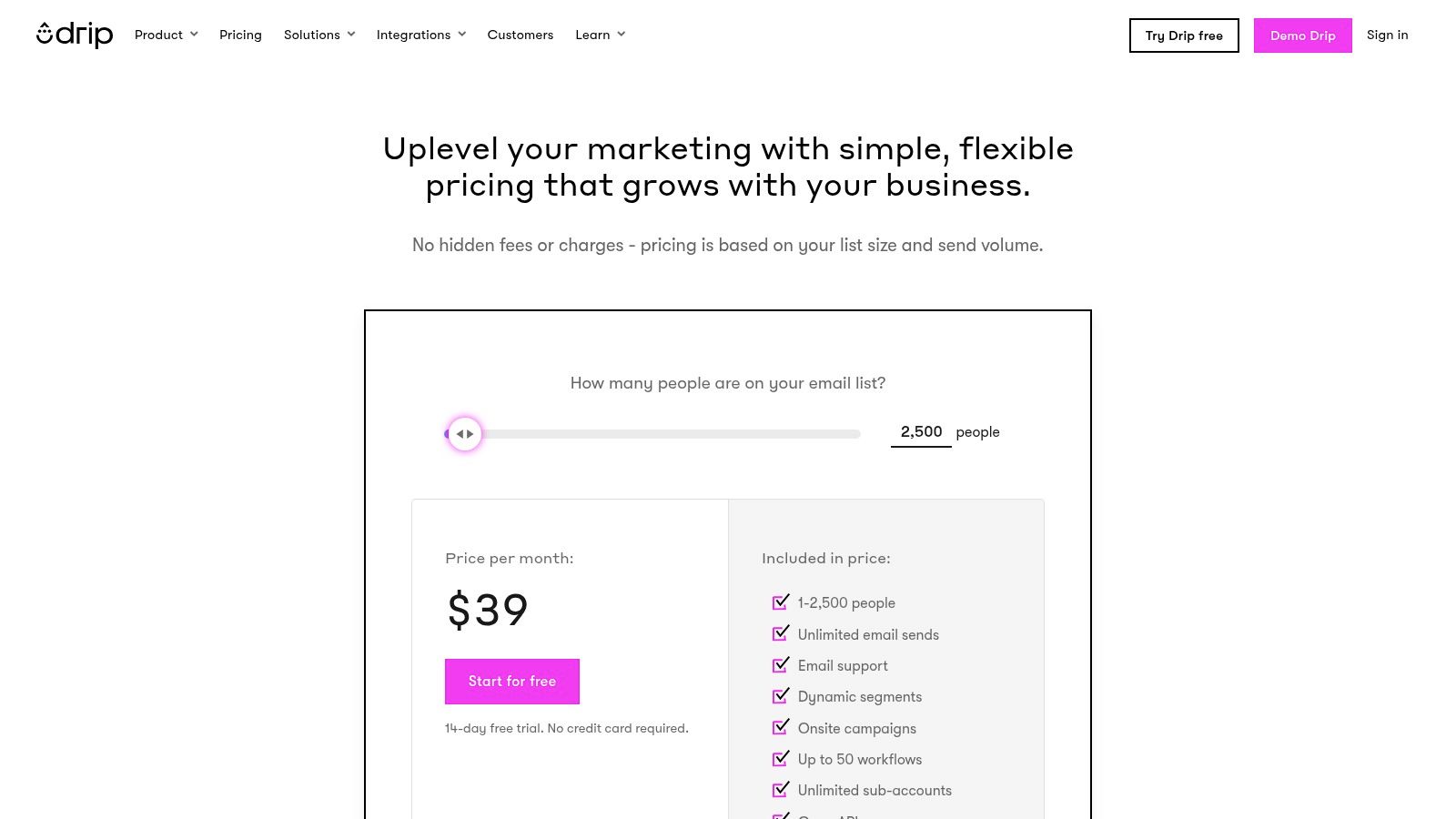
It stands out through its visual workflow canvas and deep integration with Shopify, BigCommerce and WooCommerce. Marketers can quickly add dynamic product recommendations, tag subscribers at checkout and track revenue attribution in real time. Access is fully browser-based, with a 14-day free trial requiring only an email and credit card to get started.
Core Offerings:
• Visual workflow editor with drag-and-drop triggers
• A/B testing for subject lines and content
• Dynamic product content blocks and revenue dashboards
Unique Tools:
• Native Shopify, BigCommerce and WooCommerce integrations
• Real-time revenue attribution and purchase behaviour insights
• Prebuilt ecommerce automation templates (abandoned cart, win-back)
Pricing:
• 14-day free trial with full feature access
• Plans start at US$39/month for up to 2,500 contacts
• Linear, contact-based tiers with no feature gating
Pros:
Cons:
Vision6 is an Australian-focused email and SMS marketing platform designed specifically for the needs of local businesses, government, and educational institutions. It stands out by offering local data hosting, which is a critical requirement for organisations needing to comply with Australian data sovereignty and privacy regulations. This local-first approach, combined with dedicated Australian support, makes it one of the best email marketing software choices for companies operating down under.
What makes Vision6 a strong contender is its "Command Centre," a feature designed for agencies or large organisations managing multiple accounts from a single dashboard. This, combined with unlimited users on all plans, provides exceptional value and scalability for growing teams. Its platform combines core email marketing functionality with SMS, automation, and AI-powered content assistance, ensuring users have the tools needed to create effective, multi-channel campaigns.
Vision6 organises its feature set to support compliance, collaboration, and multi-channel engagement.
Pros:
Cons:
| Platform | Core Features | User Experience | Value Proposition | Target Audience | Price Points/Plans |
|---|---|---|---|---|---|
| Mailchimp | Drag-drop editor, automation, AI | Easy onboarding, many integrations | Scalable plans, pay-as-you-go option | Small to midsize teams | Free plan (limits), monthly & credits |
| Campaign Monitor | Template locking, A/B testing | Clean interface, strong deliverability | Simple pricing, design-focused | Teams prioritizing design | Trial then paid, monthly or per-campaign |
| ActiveCampaign | Visual automation, 900+ integrations | Strong automations, scalable CRM | Deep automation, CRM add-ons | Businesses needing automation | Contact-based, pricing varies by region |
| HubSpot Marketing Hub | Drag-drop emails, CRM integration | Unified data, strong ecosystem | Marketing + sales tool integration | Marketing & sales teams | Expensive tiers, onboarding fees |
| Brevo (Sendinblue) | Email, SMS, WhatsApp, transactional | Generous free tier, phone support | Volume-based pricing, multichannel | Businesses needing multichannel | Volume-based, free tier available |
| MailerLite | Automation, landing pages, websites | Simple pricing, fast setup | Budget-friendly, good value | Creators, small businesses | Free & paid plans |
| Constant Contact | Automations, event & social tools | Phone & 1:1 onboarding support | Easy for newcomers | SMBs, event-oriented users | Contact-based, tiers vary features |
| GetResponse | Automation, funnels, webinars | Rich features, 30-day free trial | All-in-one marketing solution | All business sizes | Paid plans unlimited emails |
| Klaviyo | Event-based automation, multichannel | Ecommerce-first, scalable | Deep ecommerce integrations and analytics | Ecommerce businesses | Scales with contacts/channels |
| Omnisend | Ecommerce workflows, SMS, email | Fast setup, good analytics | Omnichannel ecommerce marketing | Ecommerce stores | Free limits, Pro unlimited emails |
| Drip | Visual workflows, dynamic content | All features included, focused ecommerce | Clear ecommerce focus | Ecommerce brands | Contact-based, 14-day free trial |
| Vision6 | Email & SMS, local hosting, automation | Local support, AI deliverability | AU-focused, compliant, multi-account | Australian businesses | Transparent AUD pricing |
Navigating the crowded landscape of email marketing platforms can feel overwhelming, but making the right choice is a pivotal step in shaping your digital communication strategy. Throughout this guide, we've analysed a dozen of the best email marketing software options available, from industry giants like Mailchimp and HubSpot to specialised powerhouses like Klaviyo and Drip. Each platform offers a unique blend of features, pricing, and strategic focus, underscoring a critical takeaway: there is no single "best" tool for everyone.
The ideal solution for your business hinges entirely on your specific circumstances. A small business or a start-up might find MailerLite's blend of user-friendliness and affordability the perfect entry point. Conversely, a rapidly scaling e-commerce brand will likely benefit more from the sophisticated segmentation and automation capabilities of platforms like Klaviyo or Omnisend, which are purpose-built to drive online sales.
Before committing to a platform, it’s vital to look beyond the feature list and assess the practical realities of implementation. Your final decision should be guided by a clear understanding of your business's current state and future goals.
Here are the most important factors to weigh:
Armed with this information, your path forward should be methodical. Shortlist two or three platforms that seem to align best with your needs. Take full advantage of the free trials or demos they offer. This hands-on experience is invaluable; it allows you to test the user interface, build a sample campaign, and explore the automation builder firsthand.
During this trial period, evaluate the platform's support resources. Is the knowledge base comprehensive? Is live chat responsive? Strong customer support can be a lifesaver when you're navigating a new system.
Finally, remember that email is just one part of a holistic digital marketing strategy. Many of the platforms we've discussed are expanding into multi-channel communication. For a comprehensive view of digital communication strategies, it's insightful to compare SMS and email marketing to understand how different channels can work together to engage your audience.
Choosing the best email marketing software is a strategic investment in your business's growth. By carefully assessing your needs, testing your options, and aligning the tool with your long-term vision, you can build a powerful engine for customer engagement and revenue generation.
Feeling overwhelmed by the options or need expert help to implement and manage your chosen platform? The team at Virtual Ad Agency specialises in crafting and executing high-performance digital marketing strategies, including email and automation. Let us help you turn your email marketing efforts into your most powerful lead generation channel. Learn more at Virtual Ad Agency.

 previous