
Ever heard the term Customer Lifetime Value (CLV)? Think of it less as a cold, hard metric and more like the total value of a long-term business friendship. It’s the total net profit you can realistically expect from any single customer over the entire time they’re with you.
This isn't about one-off sales. CLV flips the script, shifting your focus from short-term wins to the long-term health and profitability of your customer relationships.
At its heart, understanding CLV is about seeing your customers as valuable, long-term assets, not just transactions. Instead of asking, "What did this customer buy today?", the real question becomes, "How much profit will this customer bring in over the next few years?"
It’s a perspective that changes everything. This simple shift provides a powerful framework for making smarter, more profitable decisions across the board—from marketing and sales right through to product development and customer service. Once you know what a customer is truly worth over time, you can justify what you spend to get them and what you spend to keep them.
Getting a handle on CLV offers some immediate, tangible benefits that lead straight to a healthier bottom line and a more robust business. It shines a light on where to put your time and money for the best possible return.
Here's where it really makes a difference:
Customer lifetime value isn't just another KPI to track; it's a compass for your entire business. It points you directly toward your most profitable customers and guides your strategy for building relationships that last.
To get a bit more concrete, let's break down the building blocks of CLV.
This table gives a quick glance at the fundamental elements that build Customer Lifetime Value, showing you what each piece represents and how it shapes your strategy.
| Component | What It Represents | Why It Drives Strategy |
|---|---|---|
| Average Purchase Value (APV) | The average dollar amount a customer spends in a single transaction. | Tells you how to increase the value of each sale through upselling or cross-selling. |
| Purchase Frequency (PF) | How often the average customer makes a purchase within a specific timeframe. | Guides efforts to encourage repeat business, like loyalty programs or email marketing. |
| Customer Lifespan (CL) | The total time a customer actively buys from you before they churn. | Highlights the importance of retention strategies to keep customers engaged for longer. |
| Gross Margin (GM) | The percentage of revenue left after accounting for the cost of goods sold. | Ensures your CLV calculation is based on actual profit, not just revenue. |
Understanding these individual parts is the first step. When you put them all together, you get a powerful, forward-looking view of your business's health.
For Australian businesses, especially in fierce sectors like retail and banking, this is make-or-break stuff. Organisations that invest in personalising the customer experience—a massive driver of CLV—have seen their revenue jump by 44% in just two years. Why? Because a staggering 88% of Aussie customers say a great service experience makes them more likely to buy again, which directly fuels their lifetime value. You can dig into these stats in the 2025 Australian service industry report.
At the end of the day, it's this move from thinking about single sales to nurturing long-term value that separates the high-growth companies from everyone else.
So, you're ready to run the numbers? Figuring out your customer lifetime value doesn't have to be some complex, intimidating process. There are a few ways to go about it, each giving you a different level of detail and foresight. A great way to start is by looking at a simple historical view, then gradually moving towards models that can predict the future. This approach helps you build a really solid understanding of your customer base.
Let's break down three practical approaches, complete with formulas and examples in Australian Dollars (AUD), to help you find the right fit for your business.
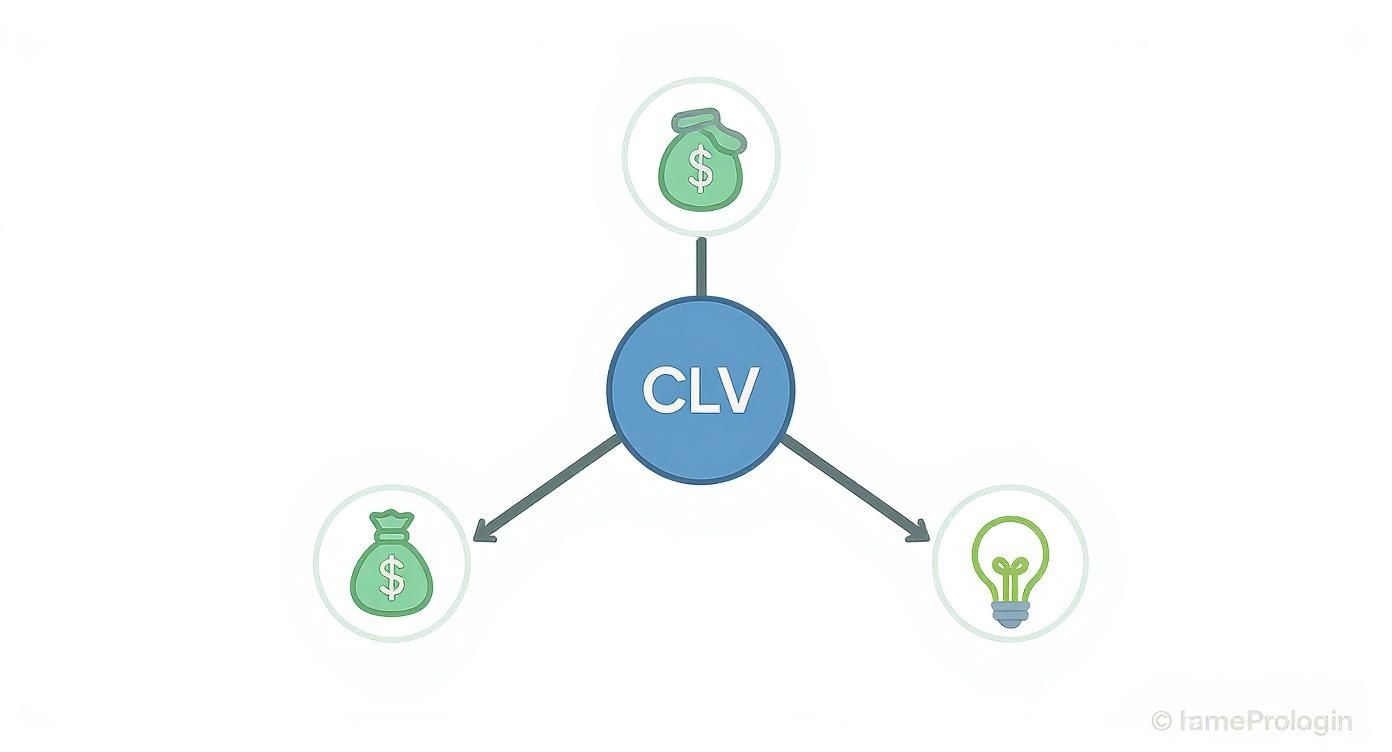
This map shows how CLV plugs directly into profit, customer relationships, and smarter business decisions. The key takeaway here is that CLV isn't just a number; it’s a strategic tool that sharpens every part of your business by shifting the focus to long-term value.
The most straightforward way to get a handle on customer lifetime value is simply to look backward. The Historic CLV model calculates the total gross profit you've made from a customer's past purchases. It doesn't try to predict the future; it just adds up what’s already in the books.
This method is an excellent starting point for any business because it uses transaction data you almost certainly already have.
The formula is nice and simple:
Historic CLV = (Transaction 1 + Transaction 2 + … + Transaction N) x Average Gross Margin
Let's put this into a real-world scenario.
This figure tells you the actual, concrete profit Sarah has generated so far. It's a solid, fact-based number you can trust for your initial analysis.
While looking back is useful, the real magic of CLV is in its ability to forecast future value. The Predictive CLV model uses past behaviour and trends to estimate how much profit a customer is likely to generate over their entire relationship with your brand.
This forward-looking approach is what you need for making smart decisions about your marketing budget and retention efforts. A common way to work this out is by using the average customer lifespan.
The formula looks like this:
Predictive CLV = Average Purchase Value x Purchase Frequency x Average Customer Lifespan
Let's see it in action.
This tells the business that, on average, a new customer is projected to be worth $1,800 in revenue. That's a crucial piece of insight when deciding how much they can afford to spend to get a new customer through the door.
Here’s a truth: not all customers are created equal. The Cohort Analysis model takes your CLV calculation a step further by grouping customers into segments, or "cohorts," based on when they first bought from you (for example, all customers who joined in January 2023).
By tracking and comparing the CLV of different cohorts, you can spot trends and see how changes in your marketing, products, or services are affecting long-term value. For instance, did the customers you acquired during your big loyalty program launch have a higher CLV than the ones from the month before?
Here’s how you'd tackle it:
The data clearly shows that the new onboarding process led to a 21% increase in CLV for Cohort B. This kind of analysis gives you actionable proof that your strategies are paying off, allowing you to double down on what truly drives value.
Figuring out your customer lifetime value is one thing, but the real magic happens when you start using that number as a strategic compass for your business. When you genuinely understand what different customers are worth over time, you can stop making decisions in the dark and start investing your resources with pinpoint accuracy. This is exactly where top Australian firms gain their edge—they let CLV data guide everything from marketing campaigns to product development.
Instead of spreading your marketing budget thinly across every channel imaginable, CLV shows you where to double down. If you discover that customers coming from organic search have a 30% higher CLV than those from paid social media ads, you know precisely where to put your next dollar. It's a shift in mindset: focus on long-term value, not just short-term wins.
One of the most critical relationships in any business is the one between what you spend to get a customer and what that customer is actually worth to you. We measure this with the LTV:CAC ratio, which compares Customer Lifetime Value (LTV) to Customer Acquisition Cost (CAC). Think of it as your business's ultimate health check.
A healthy ratio tells you that your marketing isn't just bringing in bodies; it's bringing in the right customers—the ones who will stick around and generate a real profit. It’s the cornerstone of sustainable, scalable growth.
Getting this balance right is crucial. To dig a little deeper, check out our guide on what is customer acquisition cost and see how it directly impacts your marketing ROI.
CLV is also a brilliant tool for customer segmentation. Instead of grouping customers by simple demographics, you can segment them based on their long-term value. This is where you can truly uncover the key to business growth hiding in your customer data. It opens the door to a much sharper, more targeted approach to your marketing, sales, and service.
By segmenting customers based on their lifetime value, you can create tailored experiences that resonate with each group, maximising retention and profitability.
For instance, you could identify a "high-value" segment and create exclusive loyalty programs, offer proactive customer support, or give them early access to new products. For a "low-value" segment, you might use automated marketing channels to nurture them cost-effectively, aiming to gently increase their purchase frequency over time.
This approach ensures you invest your time and money where they'll have the biggest impact.
CLV isn’t just a metric for the marketing team; it’s a powerful insight that can and should inform decisions across the entire organisation. When different departments understand which customers drive the most long-term value, they can align their efforts to attract, serve, and retain them more effectively.
| Business Function | Strategic Use of CLV Insights | Expected Business Outcome |
|---|---|---|
| Marketing | Allocate budget to channels that attract high-CLV customers. | Improved marketing ROI and acquisition of more profitable customers. |
| Sales | Prioritise leads from segments with a history of high CLV. | Increased sales efficiency and higher revenue from new customers. |
| Product Development | Develop features and products that cater to the needs of high-value customers. | Higher product adoption, increased customer satisfaction, and lower churn. |
| Customer Service | Offer premium, proactive support to top-tier customer segments. | Enhanced loyalty, higher retention rates, and more positive word-of-mouth. |
| Finance | Create more accurate revenue forecasts based on predictive CLV models. | Improved financial planning, budgeting, and overall business stability. |
By embedding CLV into the decision-making process of each function, a business can create a cohesive, customer-centric strategy that drives sustainable growth from every angle. It transforms CLV from a simple number into a shared language for value creation.
Knowing your CLV is a great start, but the real magic happens when you actively work to improve it. Bumping up your customer lifetime value is all about building stronger, more profitable relationships over time. It means looking at every single interaction as a chance to foster loyalty, encourage more spending, and stop customers from walking away.
Thankfully, you don't need to reinvent the wheel here. There are several tried-and-true strategies that consistently get results, turning your good customers into your best ones. A huge part of this is mastering the customer journey funnel to make sure you’re creating positive, valuable experiences at every single touchpoint.
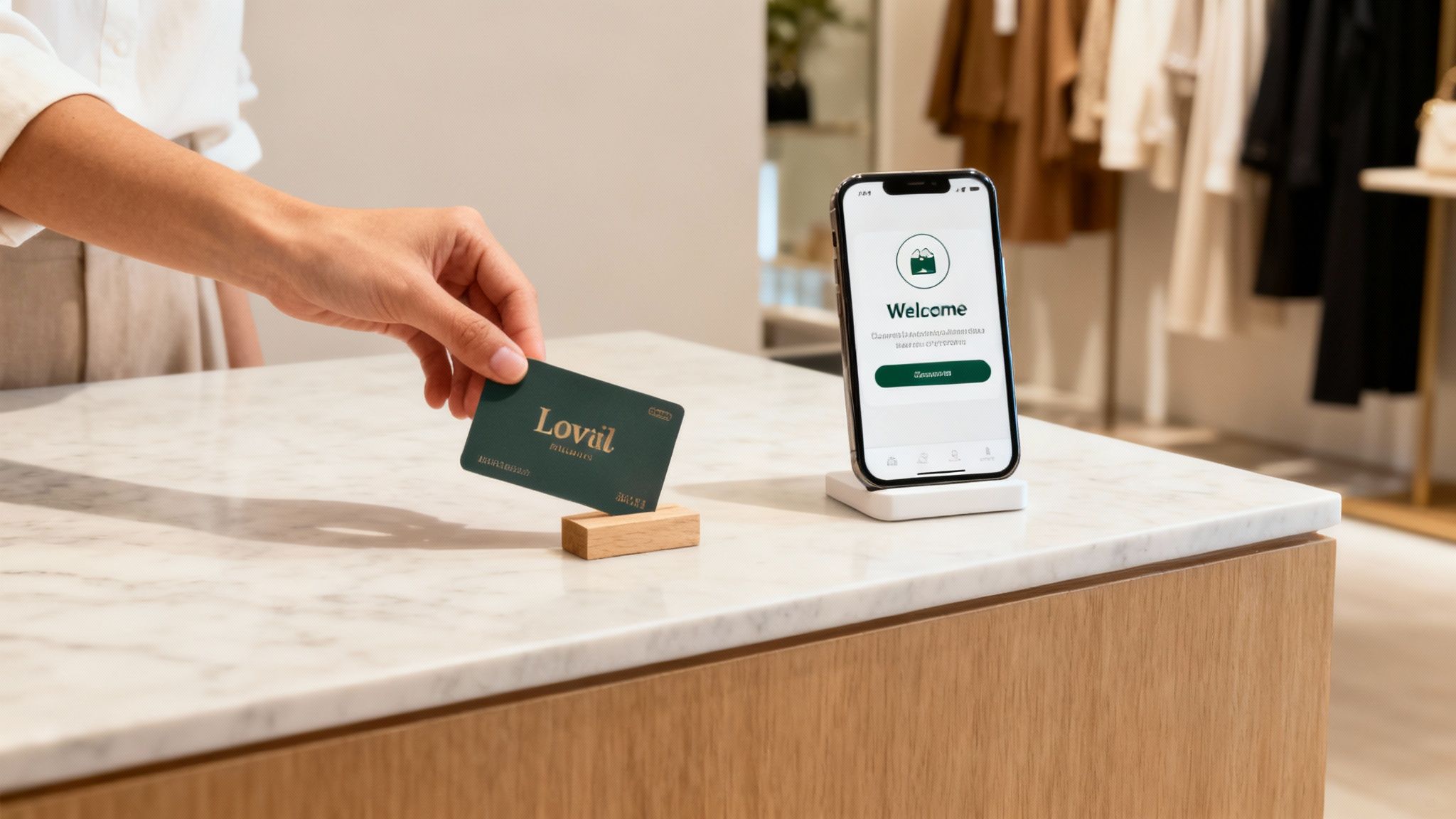
The first 90 days with a new customer are absolutely critical. If their initial experience is clunky, confusing, or feels unsupported, you’re creating frustration and planting the seeds of doubt before they’ve even had a chance to see what you're really about.
On the flip side, a seamless onboarding experience confirms they made the right choice. Your goal should be to guide them to that first "aha!" moment as quickly as possible. This builds instant confidence, sets a positive tone for the whole relationship, and makes it far more likely they’ll stick around for the long haul.
Loyalty programs are a fantastic way to encourage repeat business, but they have to offer genuine value to work. The old "buy ten, get one free" can be effective, but the best programs make customers feel genuinely recognised for sticking with you.
Think about a tiered system where rewards get better as customers spend more. You could also offer exclusive perks like early access to new products, special discounts, or invites to members-only events. It's all about creating a sense of community that goes beyond a simple transaction.
Here in Australia, the impact is massive. Repeat customers spend 67% more in their third year with a brand than they did in their first six months. The local loyalty market is set to grow to a staggering $41.21 billion by 2032, which tells you just how important this is.
One of the fastest ways to boost CLV is to increase the average amount each customer spends. This is where upselling (nudging them towards a more premium version) and cross-selling (suggesting related items) come into play.
The secret ingredient here is personalisation. Use your customer data to understand their buying history and what they’ve been looking at. This lets you make relevant, helpful recommendations that feel more like a friendly suggestion than a hard sales pitch. If someone buys a high-end camera, offering a compatible lens or a protective case just makes sense.
A great upsell or cross-sell solves a problem the customer didn't even know they had yet. It’s about anticipating their needs and adding value, which naturally leads to a higher lifetime spend.
Nothing sends customers running for the hills faster than bad service. When something goes wrong, people expect a quick, empathetic, and effective fix. Every single support ticket or phone call is a moment that can either strengthen the relationship or break it completely.
Investing in a well-trained, empowered support team delivers a massive return. When customers trust that you'll sort out any issues promptly, their confidence in your brand deepens, making them far less likely to jump ship to a competitor. These positive experiences directly feed into a longer customer lifespan and a healthier CLV. For a deeper dive, check out our guide on proven customer retention strategies to build an even more robust plan.
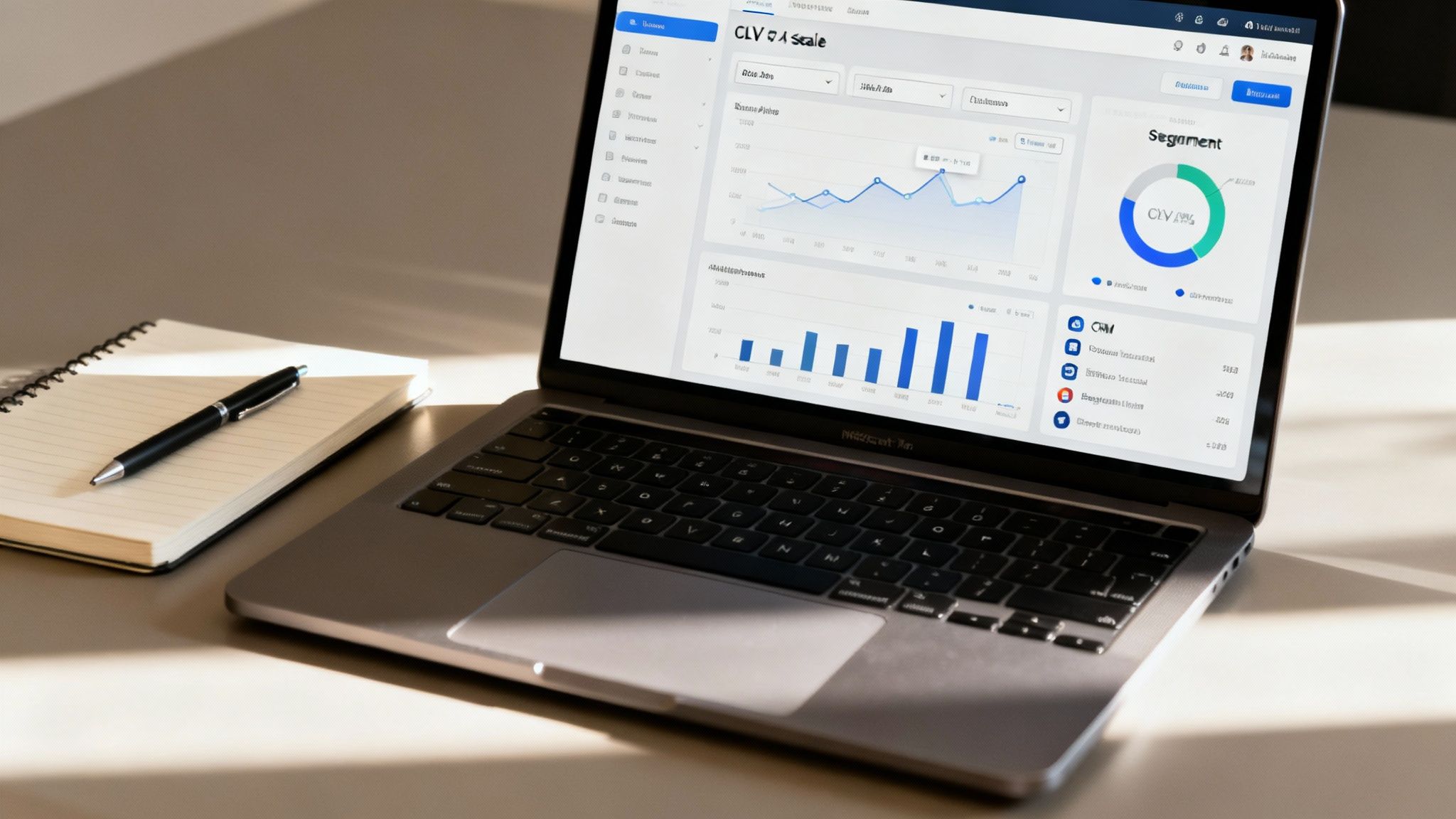
If you’re serious about tracking and improving customer lifetime value, a spreadsheet just isn't going to cut it. To really move CLV from a theoretical metric to a powerful business asset, you need a modern tech stack. The right tools are what let you gather, analyse, and act on your customer data with real precision.
This technology generally falls into three key categories. Each one plays its own unique part in painting a complete picture of your customer relationships and their long-term value. Let's look at the essential platforms that make up a solid CLV management system.
At the very heart of any CLV strategy is a Customer Relationship Management (CRM) platform. The best way to think of a CRM is as the central nervous system for all your customer data. It pulls every single interaction—sales calls, support tickets, purchase history, marketing clicks—into one unified view for each customer.
This unified profile is the absolute foundation for calculating an accurate CLV. When all that data is in one place, you can finally map out the entire customer journey and start to understand the specific behaviours that lead to a higher value.
Popular CRM platforms include:
Without a solid CRM, your data will be scattered everywhere, making any meaningful CLV analysis nearly impossible. A properly set-up CRM gives you clean, accessible data for your whole team to work with.
While your CRM tells you who your customers are, analytics platforms tell you what they do. These tools are crucial for watching the specific behaviours and engagement patterns that have a direct impact on lifetime value. They help you connect the dots between your customers' actions and your business outcomes.
For example, you can see how often someone logs into your app, which features they use most, or what content they read just before making another purchase. This behavioural data is pure gold for building predictive CLV models and really getting to the bottom of what drives customer loyalty. It also lets you see how customers react to your marketing, which is why having the best email marketing software connected to your analytics is a game-changer.
By tracking behavioural data, you move beyond simple transaction history. You start to understand the why behind customer value, enabling you to proactively encourage the actions that lead to higher CLV.
Essential analytics tools for this job are:
For businesses ready to take their CLV strategy to the next level, specialised platforms offer some seriously advanced capabilities. These tools often use machine learning and predictive modelling to forecast future customer value with a surprisingly high degree of accuracy.
They don’t just look at past purchases; they provide forward-looking insights that help you spot your high-potential customers very early on. On top of that, they allow for sophisticated segmentation, so you can create highly targeted campaigns designed to boost retention and spending within specific customer groups. Tools like Optimove and Segment are built to centralise customer data from every source you can imagine and provide the modelling tools to turn that data into smart, actionable retention strategies.
Here's the rewritten section, designed to sound like an experienced human expert, following the provided style guide.
Having a solid grasp of CLV is one thing, but turning those insights into action is where the real money is made. Let’s walk through a straightforward roadmap to get a CLV-focused strategy off the ground and properly integrated into your business operations.
This isn't just about theory; it's a practical plan to help you measure, analyse, and continuously improve this vital metric. Get this right, and you'll be paving the way for profitable, long-term growth.
Before you can crunch a single number, you need clean data and a clear destination. This first phase is all about laying a solid foundation for everything that follows.
Set Clear Objectives: First things first, what are you actually trying to achieve here? Your goals will shape your entire approach. Are you looking to beef up your marketing ROI, slash customer churn, or pinpoint your most valuable customer segments?
Consolidate Your Customer Data: You need to get all your customer information into one place, ideally a CRM. This means everything—transaction histories, support tickets, marketing email clicks, the lot. Without a single source of truth, your calculations will be guesswork at best.
With your data wrangled and organised, it’s time to run the numbers and start grouping your customers by their value.
Choose Your Calculation Model: Pick the right method for your business stage. If you're a startup, starting with a simple Historic CLV makes sense. For more established companies, leaning into Predictive models will give you far greater accuracy.
Perform Initial Analysis: It's time to run the numbers and figure out your baseline customer lifetime value. This first calculation is your benchmark—the number you’ll measure all your future improvement efforts against.
Segment Your Customer Base: Now, start grouping customers into tiers based on their CLV. Think high-value, mid-value, and low-value segments. This is crucial because it allows you to stop using a one-size-fits-all strategy and start targeting groups based on their actual potential.
Remember, the point of segmentation isn't to ignore your low-value customers. It's about tailoring your investment. Your high-value crowd might get premium support and exclusive offers, while lower-value segments could be nurtured with more cost-effective, automated campaigns.
Once you start digging into customer lifetime value, a few questions are bound to pop up. Pretty much everyone asks them. Getting your head around the answers is the key to actually using this metric to make better decisions. Let’s tackle the big ones.
This is probably the most important question of all: how does your Customer Lifetime Value (LTV) stack up against what it costs to get a customer in the door (CAC)? Think of the LTV to CAC ratio as a quick health check for your whole business model. It tells you, straight up, if you’re actually making money from the people you’re bringing in.
While every industry is a bit different, the magic number most people aim for is 3:1. That means for every dollar you put into acquiring a customer, you get three dollars back over their lifetime. It’s a solid sign of a healthy, sustainable business.
Here’s a quick breakdown of what the numbers mean:
There’s no one-size-fits-all answer here. How often you should crunch the numbers really depends on your business and how quickly things change.
Think of your CLV calculation schedule as a regular health check-up. The frequency should match how quickly your customer behaviour and the market itself are evolving.
If you’re a SaaS company or have a subscription model with lots of customer interaction, calculating CLV quarterly is a good rhythm. It lets you spot trends in churn or engagement early and react before they become big problems.
But if you’re in retail or eCommerce with longer, more seasonal buying cycles, an annual or bi-annual calculation might make more sense. It gives you a more stable, less noisy picture of what’s really going on.
This one feels like a chicken-and-egg problem, right? How can you calculate lifetime value when you barely have any "lifetime" data to look at? The good news is, you don’t have to wait years to get started. You just have to be a bit resourceful.
For a new business, the trick is to blend external data with the little bits of internal data you do have. Start by looking at industry benchmarks. What’s a typical customer lifespan or purchase frequency for businesses like yours? This gives you a baseline.
Then, look at your own early numbers. Even just a few months of data on average order value and how many people are coming back to buy again can be plugged into a simple predictive model. It won’t be perfect, but it’s a heck of a lot better than flying blind. This initial forecast gives you a starting point to make smarter calls on your marketing spend right from day one.
Ready to turn CLV insights into a powerful growth strategy? At Virtual Ad Agency, we specialise in full-funnel marketing that optimises every stage of the customer journey to boost lifetime value. Learn how we can help your business grow.

 previous