
Think of a specialist marketing company social media team as your expert navigator, guiding your brand through the complex online world to connect with the right people and spark real growth. They take the whole lot off your plate—from high-level strategy and content creation to paid ads and performance analytics—turning social platforms into genuinely powerful assets for your business.

Imagine the social media landscape is a massive, sprawling city. Each platform—Facebook, Instagram, LinkedIn, TikTok—is its own neighbourhood with a unique culture, a local dialect, and unwritten rules. Trying to navigate it all yourself is like trying to find one specific person in a foreign city without a map or a translator. You might get there eventually, but it's going to be inefficient and incredibly frustrating.
A social media marketing company is your local expert guide. They know the terrain inside out, speak the language fluently, and understand the subtle cultural cues that make a message connect rather than fall flat. They turn what feels like a time-consuming chore into a strategic investment in growth.
It's easy to see hiring an agency as just another expense. A better way to look at it is an investment in expertise, efficiency, and measurable results. Your team's time is your most valuable asset. Partnering with professionals frees them up to focus on what they do best—running your core business—while the experts handle the complex work of building your online presence.
This kind of partnership brings some serious advantages to the table:
The need for this kind of expert guidance is more critical than ever, especially here in Australia. In 2025, the country is home to 20.9 million social media users, which is a staggering 77.9% of the entire population. With nearly 18.5 million of those users aged 18 and over, you can see why marketing companies like Virtual Ad Agency in Adelaide are laser-focused on social platforms to reach customers at every stage of their journey.
A key benefit of bringing in an agency is the development of a tailored social media marketing strategy. A generic, one-size-fits-all approach just doesn't cut it anymore; real success demands a plan built specifically around your brand, your goals, and your audience.
Ultimately, the question isn’t just "Can we afford to hire an agency?" It’s "Can we afford to ignore the enormous opportunity that social media represents?" When you partner with an expert marketing company for social media, you’re not just buying a few posts. You're investing in a strategic framework designed for sustainable, long-term growth.
When you bring a social media agency on board, you’re not just handing over the keys to your Instagram account. You're commissioning a specialist team to manage four critical areas that need to work in perfect harmony to build your brand, connect with your audience, and actually grow your business.
Think of it like building a house. You can't just start throwing up walls and hope for the best. Each part of the process is distinct but totally reliant on the others. If one part fails, the whole structure feels a bit wobbly. Let's pull back the curtain and see what a social media marketing team really gets up to day-to-day, broken down into these four essential pillars.
Before a single shovel hits the dirt, an architect drafts a detailed blueprint. In the social media world, this is strategic planning. A good agency doesn't kick things off by brainstorming snappy captions; they start by asking the tough questions to understand your business inside and out.
This discovery phase is all about:
This blueprint makes sure every bit of effort is purposeful and directly tied to your business objectives. No more random acts of marketing that burn through your time and budget.
With the plan locked in, it's time for the artisans to get to work. Content creation is where the strategy becomes tangible—the posts, videos, graphics, and stories that give your brand a voice and personality. This is where the agency's creative muscle really flexes.
This goes way beyond snapping a quick photo on a phone. A huge part of what a social media agency actually does is dream up engaging concepts and fresh content ideas for social media that keep your feed from feeling stale. It covers everything from professional graphic design and video production to writing copy that actually connects. You can learn more about how strategy and creative work come together in our guide on content creation and social media.
Imagine building a brilliant community hall but keeping the doors locked and ignoring everyone who knocks. That’s a social media page without community management. It's the daily, hands-on work of talking with your audience, not just at them. It turns your profile from a broadcast channel into a lively conversation.
A brand is no longer what we tell the consumer it is—it is what consumers tell each other it is. Effective community management allows you to participate in and shape that conversation.
This means responding to comments and DMs quickly, encouraging positive chats, and handling any negative feedback with grace. A great community manager is the host of your brand's party, making every follower feel seen and heard. That's how you build real, lasting loyalty.
Finally, even the most impressive building needs a few signs pointing people in the right direction. Paid advertising, or paid social, is how an agency gets your message out there, reaching a super-specific audience that goes far beyond your current followers.
Using tools like Meta Ads (for Facebook and Instagram) and LinkedIn Ads, the agency puts your best content right in front of the people who matter most, based on their demographics, interests, and what they do online. This isn’t about shouting into the void. It's precision-guided marketing, delivering the right message to the right person at the right time. This is how you scale your reach, generate leads, and drive sales efficiently.
Good social media is never a standalone activity; it's the engine that should be driving potential customers through your entire marketing funnel. A savvy marketing company social media team doesn’t just throw content out there and hope for the best. They map every single action—every post, every ad, every comment—to a specific stage of the customer journey.
The goal? To turn casual scrollers into loyal advocates for your brand.
Think of it like being a great tour guide. You wouldn't drag a first-time visitor straight to the gift shop before they've even seen the main attraction, right? It's the same with social media. Your tactics have to be carefully sequenced to match where a person is at in their decision-making process. Get this strategic alignment right, and your efforts will directly fuel lead generation, sales, and long-term brand growth.
This visual below breaks down the typical four-step process an agency follows to build and execute a social media plan that actually works, from initial planning right through to paid advertising.
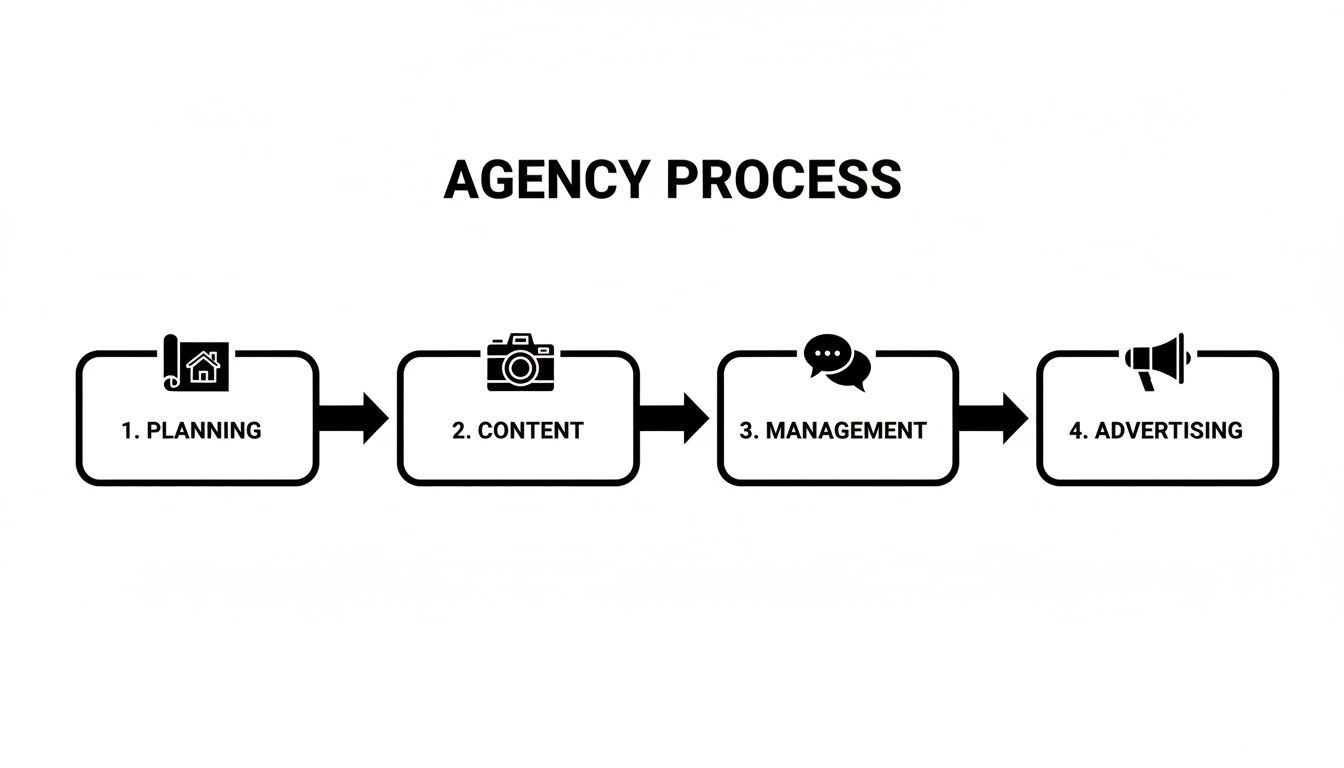
As you can see, a structured approach is key. It’s what connects planning, content creation, community management, and paid ads into one seamless, effective workflow.
Right at the top, you have the Awareness stage. The main goal here is simple: introduce your brand to people who have no idea you exist. The trick is to grab their attention quickly and make a memorable first impression, all without coming across as pushy or overly "salesy."
Content at this stage should be broad, entertaining, and engaging. Think of it as a captivating movie trailer that sparks curiosity and leaves the audience wanting to know more.
Some winning tactics for the Awareness stage include:
Once someone knows who you are, they slip into the Consideration stage. Now, your job shifts from just grabbing attention to actively building trust and showing your value. Your audience is weighing up their options, and your social media content needs to prove why you're the best choice.
This is where you start offering genuine value and positioning your brand as an expert in your field. You’re no longer just introducing yourself; you’re starting a real conversation and providing helpful insights that solve your audience's problems.
This stage is all about nurturing relationships. Your goal is to go from being just another brand they know to becoming a resource they genuinely trust and rely on.
Common tactics for the Consideration stage involve:
Finally, we have the Conversion stage at the bottom of the funnel. By now, your prospect is well-informed and on the verge of making a decision. Your goal is straightforward: make it as easy and compelling as possible for them to take that final step, whether that's making a purchase, booking a demo, or signing up for a free trial. If you want to dive deeper on this, you might find our guide on building a social media media plan that gets results pretty useful.
Social media content here becomes much more direct and action-focused. The messaging hones in on benefits, exclusive offers, and creating a little bit of urgency. Targeted advertising is especially powerful at this point. This includes running retargeting ads that show specific products to users who’ve already viewed them on your website, effectively giving them a gentle nudge to come back and complete their purchase.

In social media, it’s incredibly easy to get dazzled by big numbers that look impressive but don't actually do anything for your business. A skilled marketing company social media team knows the vital difference between metrics that feel good and metrics that are good for your bottom line.
Real success isn't about chasing likes or racking up a massive follower count. While these figures can be part of the bigger picture, they're often just "vanity metrics"—numbers that are easy to point to but offer very little insight into genuine business impact. True success is measured by actionable KPIs (Key Performance Indicators) that tie social media activity directly to your business goals.
Think of your social media presence as a car. Vanity metrics are like how loud the engine roars or how shiny the paint job is. Sure, they might turn heads, but they don't tell you how fast you're going or if you're even pointed in the right direction. Actionable metrics, on the other hand, are your speedometer, your fuel gauge, and your GPS—they tell you exactly how you're performing on the journey to your destination.
A professional agency will immediately shift the focus to the numbers that truly matter:
By prioritising these kinds of KPIs, an agency makes sure your investment is delivering a real, tangible return. For a deeper dive, check out our article on the most important digital marketing performance metrics your business should be tracking.
Getting a report from your social media agency shouldn't feel like being handed a phone book full of raw data. A top-tier agency doesn't just throw numbers at you; they deliver analysis and tell a clear story about what those numbers mean for your business.
A great report is far more than a data dump—it's a strategic analysis. It should connect past performance to future actions, giving you clear, data-backed recommendations for the next month or quarter.
A quality report from your marketing company for social media will always include three key things:
This approach turns reporting from a simple look-back exercise into a powerful tool for constant improvement. It allows you to hold your agency accountable and gives you a transparent view of the real value being driven by your social media investment.
Figuring out how a social media marketing company structures its fees is a big piece of the puzzle. It helps you set a realistic budget and find a partner that’s the right fit. There’s no one-size-fits-all price tag; instead, agencies use a few different models to match the job at hand.
Let's unpack the three most common ways agencies charge for their work. Each has its own upsides and downsides, and knowing the difference will help you understand exactly what your investment gets you from day one.
The most common setup you’ll come across is the monthly retainer. You can think of it like a subscription for your social media marketing team. You pay a fixed fee every month for a pre-agreed bundle of services, like creating content, managing your community, and sending through regular performance reports.
This model is a fantastic choice for businesses that need consistent, long-term support. It makes budgeting predictable and allows the agency to really sink its teeth into your brand, becoming an extension of your own team. Over time, they develop a deep understanding of your voice, your audience, and what makes them tick.
A standard retainer package often includes things like:
The biggest plus here is the stability and the deep, strategic partnership that develops. The main thing to keep in mind is that it’s a long game. Building a strong organic presence takes time, so you need to be committed to see the best results.
The retainer model is built on partnership and consistency. It’s less about a single campaign and more about embedding a team of experts into your marketing function to drive steady, sustainable growth.
Sometimes you don’t need someone to manage everything, all the time. You just need a specific, one-off job done—and done well. This is where project-based pricing comes into play. You simply agree on a flat fee for a project with a clear start and finish line.
This approach is perfect for well-defined campaigns. You might hire an agency to launch a new product, run a three-month influencer campaign, or create a batch of slick video content for your channels.
The main benefit is crystal-clear clarity. You know exactly what you’re getting and what it will cost, with no long-term strings attached. The catch, of course, is that the work stops when the project ends. This model is ideal for businesses that already have a solid in-house team but just need some specialist firepower for a particular initiative.
A less common but increasingly popular option is the performance-based model. Here, the agency's fee is directly tied to the results they deliver. Think metrics like leads generated, sales conversions, or hitting a specific return on ad spend (ROAS).
This is a really attractive model because it links cost directly to value—you only pay for tangible outcomes. It’s a huge vote of confidence from the agency that they can get the job done. However, it requires rock-solid tracking and can be a bit more complex to set up.
It’s best suited for businesses with clear, measurable goals, like e-commerce brands or companies focused squarely on lead generation. The fees might look higher on paper, but because you’re paying for results, the risk is often much lower.
Picking a social media marketing partner is a big deal. This decision will directly shape how the public sees your brand and, ultimately, how you grow. It's not just about finding someone to schedule a few posts; you're forming a strategic partnership. To make sure you get it right, you need to walk into those initial conversations ready with the right questions.
The answers you get back will tell you everything about an agency’s expertise, their processes, and whether they can actually walk the walk. Think of it as an interview. You’re not just assessing their skills, but also how well they’ll mesh with your company’s culture and goals. A vague or slippery answer? That’s usually a massive red flag.
First things first, you need to understand how they think, not just what they do. A top-shelf agency always leads with strategy. Every single action they take has a clear purpose behind it. Without a solid plan, social media efforts can quickly turn into random acts of marketing that just burn through your budget with nothing to show for it.
Kick things off with these foundational questions about their strategic process:
Strategy is vital, but it’s completely useless without the ability to execute. You need cold, hard proof that the agency has a history of delivering real results for businesses like yours. Their past performance is the single best predictor of your future success together.
The most reliable agencies are proud of their work and totally transparent about their results. If they get cagey about sharing case studies or client references, consider it a major warning sign.
Dig into their experience with these pointed questions:
Of course. Here is the rewritten section, crafted to match the human, expert tone of the provided examples.
Even when you know all the benefits, bringing a social media agency into the fold is a big decision. It’s completely normal to have a few practical questions rattling around before you sign on the dotted line. Let’s tackle some of the most common ones we hear from business owners.
Think of this as clearing up the day-to-day realities of how a partnership like this really works, so you can feel confident moving forward.
This is always the first question, and rightly so. You want to know when your investment will start paying off. While you’ll likely see early wins in things like engagement and follower numbers in the first month, the real impact on your bottom line—leads and sales—usually takes around three to six months to build momentum.
Why the wait? Because good strategy takes a little time to marinate:
Sure, paid ads can put a rocket under that timeline, but building a solid, sustainable organic presence is a long-term play. Any professional agency will give you clear 30, 60, and 90-day milestones so you can see the progress for yourself every step of the way.
It’s a common fear: will an outside team “get” our brand’s unique personality? A good agency doesn’t overwrite your brand; they become a megaphone for it. The whole onboarding process is designed to make sure this never happens.
Think of a social media agency as a specialist extension of your own team. Their job is to learn your brand's voice so well that they can represent you authentically and consistently, freeing you up to focus on other priorities.
The first step should always be in-depth discovery sessions where we create detailed brand voice guidelines together. You should always, always have the final say on content calendars, creative, and major campaigns. No surprises.
Your input is absolutely vital at the start. We need you to download everything you know about your business, your ideal customers, and your biggest goals. That foundational knowledge is what the entire strategy is built on.
Once we’re up and running, your role shifts from hands-on to high-level. Day-to-day, your main responsibilities will be:
We keep communication streamlined, usually through a dedicated account manager, so your time is spent making key decisions, not getting bogged down in the daily grind. That’s what you hired us for.
Ready to see how a dedicated social media strategy can transform your business? The expert team at Virtual Ad Agency specialises in creating and executing full-funnel social media plans that deliver measurable results. Get in touch with us today.

 previous