
In the fast-paced world of digital marketing, a truly groundbreaking social media campaign can redefine a brand's connection with its audience. It’s not just about posting content; it’s about creating moments, sparking conversations, and building communities that drive real business outcomes. But how do the world’s most successful brands consistently achieve this level of engagement and impact?
We’ve delved deep into some of the most iconic social media marketing examples to uncover the strategic thinking behind their viral success. From purpose-driven movements that capture global attention to witty, real-time engagement that feels personal, these campaigns offer a masterclass in creativity, strategy, and execution. This article will break down the specific objectives, innovative tactics, and measurable results of nine legendary campaigns, providing you with a blueprint of actionable takeaways. By understanding the 'why' and 'how' behind their triumphs, you can start building a more impactful and sophisticated social media presence for your own organisation. While many of these campaigns incorporate various marketing disciplines, you can dive deeper into diverse strategies and learn from other brands by exploring these more successful influencer marketing examples as well.
Nike's 2018 'Dream Crazy' campaign, fronted by American civil rights activist and former football player Colin Kaepernick, is a masterclass in purpose-driven social media marketing. The campaign centred on the powerful tagline, "Believe in something. Even if it means sacrificing everything," directly referencing Kaepernick's controversial protest against racial injustice. By taking a firm, albeit polarising, stance on a significant social issue, Nike transformed a sponsorship into a global conversation, proving that brand values can drive unprecedented engagement and loyalty.
The campaign’s launch was simple yet explosive: a single tweet from Kaepernick featuring a black-and-white portrait with the tagline. This single piece of content ignited a firestorm of discussion across all social media platforms, perfectly demonstrating how a calculated risk can serve as a powerful catalyst for brand amplification. This is one of the most impactful social media marketing examples because it showcases how aligning with a powerful social cause can resonate deeply with a core audience, even at the risk of alienating others.
The initial backlash was intense, with calls for boycotts, but the data quickly revealed the campaign's strategic success. The following infographic visualises some of the campaign's most powerful immediate results, showcasing its viral reach and commercial impact.
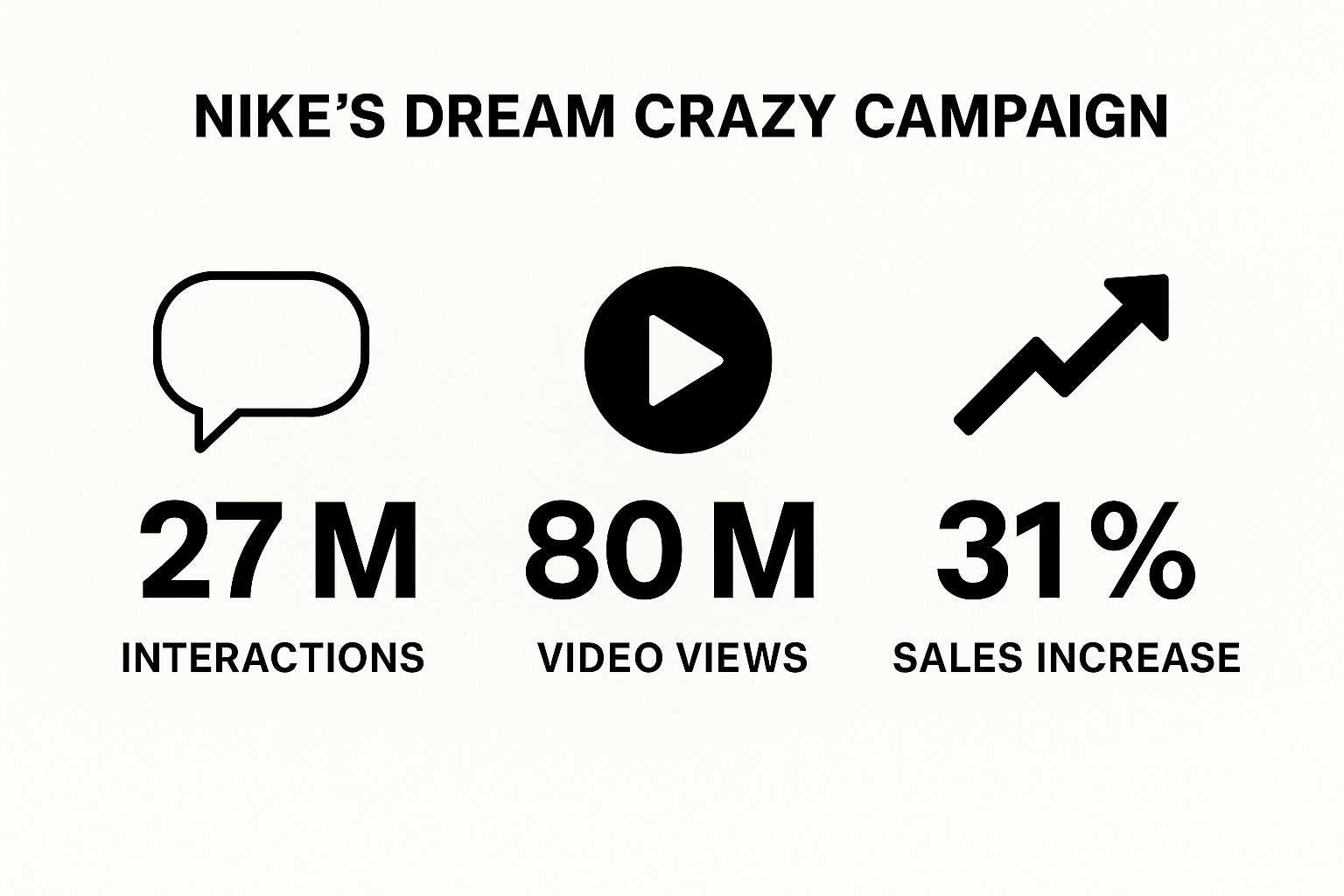
These metrics confirm that despite the controversy, the campaign dramatically increased brand engagement and drove significant sales growth among Nike's target demographics.
Wendy's transformed its social media presence from a standard corporate account into a viral entertainment channel by adopting a witty, sassy, and sometimes savage brand voice. This strategy centres on roasting competitors, engaging in playful banter with followers, and creating culturally relevant memes. By personifying their brand with a distinct and confident personality, Wendy's turned their Twitter feed into a must-follow account, proving that humour and authenticity can build a fiercely loyal community.
The brand's success stems from its real-time, reactive content that feels both spontaneous and strategic. From roasting McDonald's for using frozen beef to sparking the viral #NuggsForCarter campaign that became the most retweeted tweet of its time, Wendy's consistently generates massive organic reach. This approach is one of the most effective social media marketing examples because it demonstrates how a bold, personality-driven content strategy can cut through the noise, making a brand a central part of online conversation rather than just a participant.
The strategy’s viral nature has produced staggering results, turning simple tweets into major media events. The annual "National Roast Day" creates industry-wide buzz, while individual roasts often garner millions of impressions and hundreds of thousands of engagements. The Carter Wilkerson nugget tweet alone generated over 3.4 million retweets, showcasing the immense power of combining community engagement with a clear call to action, even when it starts as a joke. This consistent virality has solidified Wendy's as a leader in brand voice innovation.
Dove's long-running 'Real Beauty' campaign is a landmark example of how challenging industry norms can build an authentic, lasting connection with a global audience. Launched in 2004, the campaign pivoted from traditional aspirational advertising to celebrate real women of diverse shapes, sizes, and ethnicities. By focusing on emotional storytelling and sparking conversations about self-esteem, Dove built a powerful community long before it was a standard marketing tactic. The campaign’s core message is about redefining beauty standards, making it a powerful and enduring force in purpose-driven marketing.
This campaign stands out among social media marketing examples because it transformed Dove from a simple soap brand into a champion for self-acceptance. Its viral video "Real Beauty Sketches," which has over 68 million views on YouTube, perfectly illustrates this. The video’s emotional impact created a massive organic conversation across social platforms, demonstrating that genuine human stories resonate far more deeply than polished product advertisements. Dove proved that a brand could foster loyalty by empowering its audience rather than just selling to them.
The 'Real Beauty' campaign has delivered consistent, long-term results, cementing Dove's market position and brand equity. Its success is not just measured in viral hits but in sustained growth and a profound cultural impact. The data shows how this emotionally intelligent strategy translated into tangible business success.
Airbnb's entire social media presence is a masterclass in leveraging user-generated content (UGC). Instead of relying solely on polished, professional photography, the brand built its empire by showcasing authentic travel experiences captured by its own community of hosts and guests. This strategy transforms customers into brand ambassadors, creating a continuous, trustworthy, and cost-effective stream of content that fuels wanderlust and drives bookings.
By featuring real homes, real people, and real adventures, Airbnb builds a powerful foundation of social proof. This approach is one of the most effective social media marketing examples because it turns a platform's feed into a dynamic, community-curated travel magazine. Campaigns like #AirbnbExperiences and the 'Live Anywhere' initiative masterfully tap into user aspirations, demonstrating how authentic storytelling can create a highly engaged global audience.

This consistent focus on community content has allowed Airbnb to build an Instagram following of over 5 million, with an engagement rate that many brands envy. The key is in the authenticity; each post reinforces the idea that unique, incredible travel is accessible to everyone. To learn more about how to get social media working for your business, you can find valuable insights that break down strategies like these.
Old Spice’s "The Man Your Man Could Smell Like" campaign is a landmark case study in rebranding through viral social media marketing. Launched in 2010, the campaign, featuring actor Isaiah Mustafa, used absurd, fast-paced humour to shatter the brand's dated image and appeal to a much younger demographic, including female purchasers. The initial TV commercial became a viral sensation on YouTube, but the true genius was in the subsequent social media activation. Old Spice didn't just broadcast; it engaged in a two-way conversation.
The campaign’s second phase, the "Response Campaign," solidified its legendary status. The brand’s agency, Wieden+Kennedy, had Isaiah Mustafa record short, personalised video responses to comments and questions from fans and celebrities on platforms like Twitter and Facebook. This real-time interaction was groundbreaking, creating 186 personalised videos in just a few days. This remains one of the most powerful social media marketing examples because it proved that direct, humorous, and timely engagement could transform passive viewers into active brand advocates and drive spectacular commercial results. During the campaign, Old Spice's sales increased by a staggering 125%.
Spotify's annual Wrapped campaign is a quintessential example of data-driven personalisation turned into a viral social media phenomenon. Each December, the platform transforms individual user listening data into a vibrant, shareable story that summarises their year in music. By presenting personal analytics like top artists, genres, and listening minutes in visually appealing formats, Spotify empowers users to become brand ambassadors, generating immense organic reach as they share their unique musical identities.
The campaign's genius lies in its simplicity and social design. Spotify creates easily shareable assets, such as Instagram Stories and summary cards, that are perfectly optimised for social platforms. This makes sharing one's music taste an effortless and engaging act, tapping into the human desire for self-expression and social comparison. As #SpotifyWrapped trends globally year after year, it stands as one of the most powerful social media marketing examples because it turns mundane user data into a compelling, community-driven event that users eagerly anticipate and participate in.
The scale of Wrapped is staggering, with its viral nature generating billions of impressions and dominating social conversations each year. The 2022 campaign alone saw over 156 million users engage with their personalised experience. This widespread sharing not only reinforces brand loyalty among existing users but also serves as a massive, user-generated advertisement to attract new subscribers who experience a fear of missing out.
GoPro’s social media strategy is a masterclass in turning customers into a brand's most powerful marketing engine. By focusing on user-generated content (UGC), GoPro built an empire not just by selling cameras, but by selling the dream of adventure. The company actively encourages its users to capture and share their most thrilling moments, from extreme sports to family holidays, using hashtags like #GoPro. This approach populates their social feeds with an endless stream of authentic, high-energy content that perfectly showcases the product's capabilities in real-world scenarios.
This strategy transformed consumers into brand ambassadors and content creators, fostering a deeply engaged and loyal community. The GoPro Awards program, which offers cash prizes for standout photos and videos, gamified content creation and professionalised the UGC model. This is one of the most powerful social media marketing examples because it demonstrates how to build a brand identity almost entirely on content from the community, creating a self-sustaining marketing ecosystem that is both cost-effective and incredibly authentic.
GoPro's community-centric approach has resulted in staggering social media growth and brand recognition. The constant flow of user-submitted content has allowed them to dominate platforms like YouTube and Instagram with minimal in-house production costs, building a vast library of aspirational footage that inspires further purchases and content creation.
These figures illustrate a highly successful content loop: customers buy cameras, capture amazing content, share it for a chance to be featured or win awards, and their content inspires new customers to buy cameras.
Netflix has perfected the art of turning content releases into global cultural conversations, making them a benchmark for event-driven social media marketing. Rather than simply promoting a show, their strategy focuses on creating and capitalising on viral moments that dominate social platforms. By tapping into internet culture with memes, challenges, and real-time engagement, Netflix transforms viewers into active participants, ensuring their content becomes an inescapable cultural phenomenon.
This approach is one of the most powerful social media marketing examples because it demonstrates how to extend a campaign’s life far beyond its launch. From the Bird Box challenge becoming a viral sensation to the Wednesday dance taking over TikTok, Netflix consistently engineers moments that drive organic, user-generated promotion. Their team masterfully identifies shareable elements within their content and uses them to ignite widespread social chatter, keeping their titles trending for weeks.
The results of this strategy are consistently staggering, turning regional shows into global hits and new seasons into can't-miss events. The Squid Game phenomenon illustrates this perfectly, as organic social media buzz-fuelled by memes and discussions-drove its ascent to become Netflix's most-watched series ever. Similarly, the Wednesday dance trend on TikTok generated billions of views, propelling the show to massive viewership figures and cementing its place in pop culture. This organic reach translates directly into subscriber growth and retention.
Chipotle's early and enthusiastic adoption of TikTok showcases a masterclass in platform-native marketing, particularly for engaging a Gen Z audience. Instead of repurposing content from other platforms, Chipotle built a strategy from the ground up that embraced TikTok's unique culture of trends, challenges, and authentic, low-fi video. By focusing on user participation and behind-the-scenes content, the brand transformed its social media presence from a simple broadcast channel into a thriving community hub.
The brand's success is rooted in its ability to launch viral, user-generated content campaigns. The #GuacDance challenge, for instance, generated over 250,000 video submissions and became one of the platform's highest-performing branded challenges. This is one of the most effective social media marketing examples because it highlights how brands can achieve massive organic reach by creating fun, simple, and shareable challenges that align perfectly with platform trends, rather than just pushing promotional messages.
Chipotle's commitment to TikTok has yielded impressive and sustained results, establishing it as a leader in short-form video marketing. The data highlights how their strategy has translated into a massive and highly engaged following, making them a benchmark for brands on the platform.
These metrics demonstrate that a TikTok-first approach, grounded in authenticity and community participation, can drive both brand awareness and tangible business outcomes.
| Campaign | Implementation Complexity | Resource Requirements | Expected Outcomes | Ideal Use Cases | Key Advantages |
|---|---|---|---|---|---|
| Nike's Colin Kaepernick "Dream Crazy" | High – requires authentic alignment, crisis prep | High – celebrity endorsement, cross-platform | Massive engagement, brand loyalty, sales increase | Bold social issue engagement | Strong brand positioning, sustained buzz |
| Wendy's Twitter Roasting Strategy | Medium – skilled social media team needed | Medium – ongoing social interaction | Viral moments, strong brand differentiation | Personality-driven social content | Cost-effective, high engagement |
| Dove's Real Beauty Campaign | High – consistent values and emotional storytelling | High – long-term commitment, global consistency | Strong emotional connection, viral sharing | Social cause and authenticity | Positive brand loyalty, industry differentiation |
| Airbnb's User-Generated Content | Medium – active community management | Medium – content curation and engagement | Authentic trust-building, high engagement | Community-driven marketing | Cost-effective, diverse authentic content |
| Old Spice's Viral Video Campaign | High – high production and creative costs | High – video production, real-time responses | Viral reach, brand repositioning, sales rise | Humor-driven rebranding | Memorable content, strong engagement |
| Spotify Wrapped Campaign | High – significant data infrastructure | High – data processing and visualization | Massive organic reach, user participation | Data-driven, personalized content | Annual user engagement, platform retention |
| GoPro's Adventure Content Marketing | Medium – content quality control needed | Medium – user submissions, influencer partnerships | Authentic demos, strong community | Action sports and adventure | Product showcase, high engagement |
| Netflix's Cultural Moment Marketing | High – requires real-time monitoring and rapid response | Medium – content creation and trend adaptation | Viral cultural engagement, subscription growth | Real-time event marketing | High organic reach, strong cultural relevance |
| Chipotle's TikTok-First Strategy | Medium – constant native content creation | Medium – influencer partnerships and trend tracking | High Gen Z engagement, viral reach | Platform-native, trend-based content | Authenticity, first-mover advantage |
The journey through these powerful social media marketing examples, from Nike's bold stance to Chipotle's TikTok mastery, reveals a powerful, unifying truth: success isn't about replicating tactics, it's about mastering principles. Each brand we've analysed achieved legendary status not by following a generic playbook, but by forging a unique connection between their core identity, their audience's desires, and the specific culture of their chosen platforms.
They demonstrate that exceptional marketing is rarely about playing it safe. It’s about understanding your brand so deeply that you can afford to be bold, humorous, or heartfelt in a way that feels authentic and earns trust.
If we boil down the diverse strategies of brands like Spotify, Dove, and Wendy's, three core pillars consistently emerge as the foundation for high-impact campaigns:
So, how do you translate these high-level social media marketing examples into tangible action for your own business? The path forward involves a strategic blend of analysis and creative courage. Begin not by asking "How can we go viral?", but by asking deeper, more foundational questions:
Answering these questions honestly is the first step toward creating a campaign that doesn't just chase fleeting trends but builds lasting brand relevance. The ultimate goal is to move from being a brand that simply broadcasts messages to one that builds communities, sparks conversations, and becomes an integral part of your audience’s digital life.
Feeling inspired but need a strategic partner to bring your vision to life? The team at Virtual Ad Agency specialises in translating the principles behind these world-class social media marketing examples into bespoke, data-driven strategies for Australian businesses. We help you move from inspiration to measurable results, crafting campaigns that resonate with your audience and drive real growth. Learn more about how Virtual Ad Agency can elevate your social media presence.

 previous