
Ever scrolled through a news site or your social feed and clicked on a story that looked just like any other, only to realise it was sponsored content? That’s native advertising in action.
Think of it as the chameleon of the marketing world. It’s designed to match the look, feel, and function of the platform where it appears, blending in with the surrounding articles, videos, or posts instead of screaming for attention.

Unlike a flashy banner ad that shouts from the sidelines, a native ad slips seamlessly into your natural browsing flow. It’s built to be helpful, interesting, or entertaining, subtly promoting a brand while respecting your time and attention. This is why it’s so good at building trust.
A sponsored article on a publisher’s website, for instance, reads just like their usual editorial content. A promoted post in your LinkedIn feed mirrors the format of updates from your connections. This clever integration is the key to overcoming “banner blindness”—that all-too-common habit we’ve all developed of subconsciously ignoring anything that looks like a traditional ad.
At its heart, native advertising is about delivering a marketing message without yanking someone out of their online journey. It works by aligning with the platform’s own content in three crucial ways:
By creating a cohesive experience, native ads foster a much more positive connection with a brand. In fact, consumers are 53% more likely to look at native ads than display ads, and they show a significantly higher intent to purchase.
This non-disruptive approach allows brands to engage with their audience on a much deeper level. Instead of forcing a sales pitch, you’re earning their attention by actually contributing something of value. It’s less about selling and more about starting a conversation, which is exactly why it’s become such a vital part of any serious digital marketing strategy.
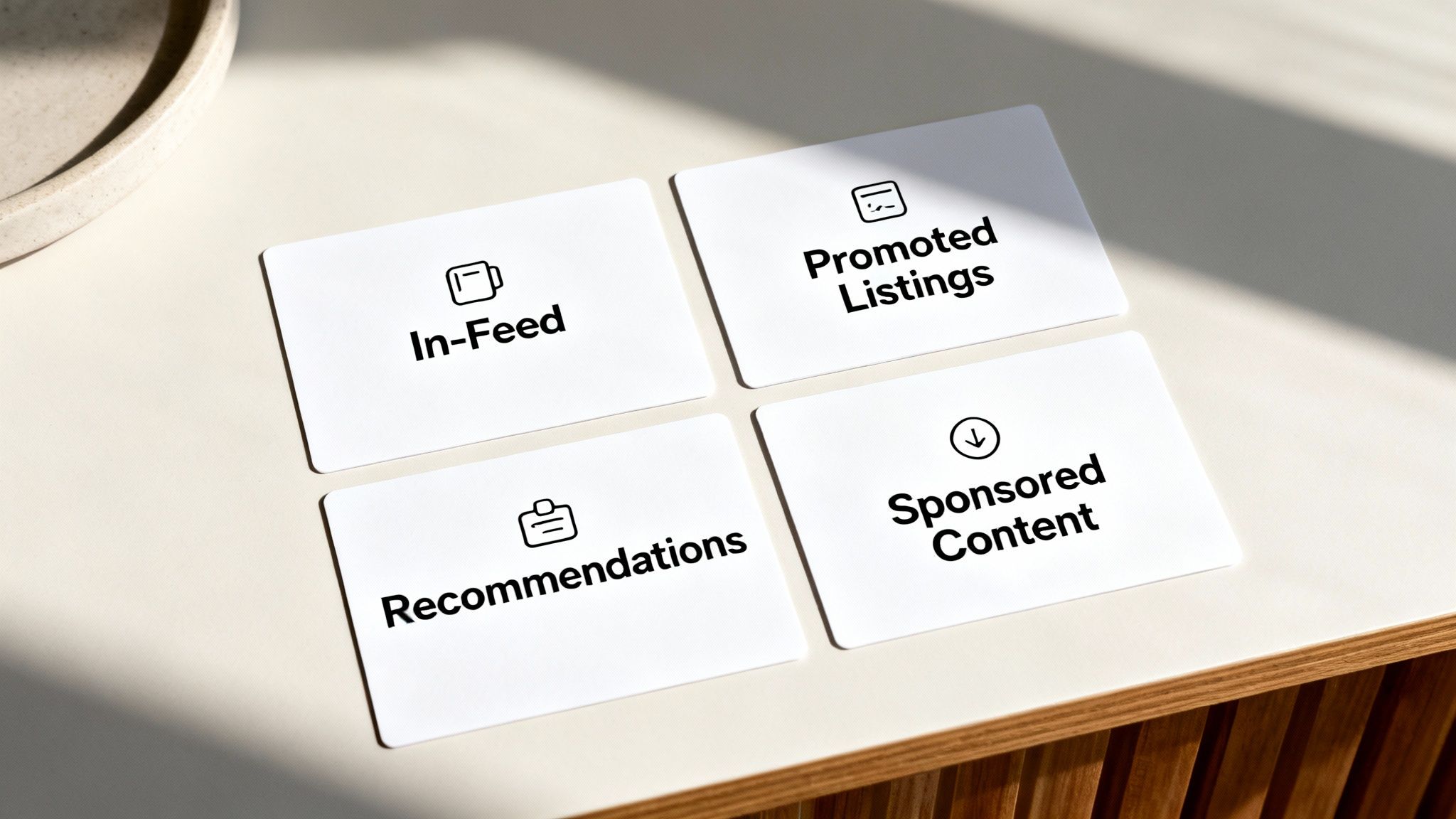
Native advertising isn't just a single tactic; it’s a whole family of ad formats. Each one is designed to fit snugly into different digital environments, so picking the right one is your first move toward a successful campaign.
The common thread? They all work by matching what a user expects to see on a particular platform. This makes your brand's message feel less like a jarring interruption and more like a helpful discovery. Let's pull back the curtain on the most common formats you'll come across.
This is probably the format you picture when you hear "native ads". In-feed ads are paid placements that show up right inside a platform’s regular content feed, blending in with the organic posts around them. Think of a sponsored post in your LinkedIn feed or a promoted article on a news site’s homepage.
Because they look and feel like part of the natural flow, people interact with them just like any other post—scrolling past, liking, sharing, or commenting. It’s a brilliant way to grab attention without ruining the user’s browsing rhythm, making it perfect for building brand awareness and getting people engaged.
Sponsored content is a much deeper, more editorial play. It’s a partnership where a brand teams up with a publisher to create a genuinely valuable piece of content—like an article, video, or infographic—that lives on the publisher's website. The brand foots the bill, but the content is crafted to match the publisher's voice and quality.
This kind of collaboration lets you "borrow" the publisher's credibility to reach their highly engaged audience. Imagine a cybersecurity firm working with a major business publication to release an in-depth report on protecting enterprise data. The article gives readers real value while positioning the firm as a genuine thought leader.
The secret to great sponsored content is authenticity. It has to focus on providing real insight or entertainment, not a hard sales pitch. That’s how you build trust and positive brand association.
You’ve definitely seen these. They're the carousels of content often tucked away at the bottom of an article, usually with a heading like "You Might Also Like" or "Recommended For You."
These widgets suggest related articles from other websites, and brands can pay to have their own content pop up in the mix. It's an incredibly powerful way to get in front of someone the exact moment they've finished reading something similar and are wondering what to click on next. It's all about context, driving relevant traffic and introducing your brand to fresh eyes.
Used mostly on e-commerce giants like Amazon or other online marketplaces, promoted listings are paid ads for products that appear right inside search results or category pages. They’re designed to look almost identical to the regular product listings, often with just a small "Sponsored" tag to set them apart.
This format is a killer at the bottom of the marketing funnel. You're targeting people with high purchase intent who are actively searching for what you sell, putting your product directly in their path. Many of these placements run on complex bidding systems, an area where knowing what is programmatic advertising can give you a massive edge by automating the ad buying process for peak efficiency.
The shift towards native advertising isn’t just some passing trend; it's a direct answer to how people have fundamentally changed the way they consume content online. For years, we’ve all become experts at subconsciously ignoring banner ads—a phenomenon known as banner blindness. Native ads manage to slice right through that noise because they offer a completely different, non-intrusive experience.
Instead of interrupting your flow, native ads integrate into it. They show up as valuable, relevant content that genuinely aligns with what you’re already reading or watching. This seamless approach doesn’t just grab attention; it builds a much more positive first impression for a brand. When an ad feels less like a sales pitch and more like a helpful discovery, people naturally want to engage.
One of the biggest wins with native advertising is the ability to build trust by association. Think about it: when a brand's sponsored article appears on a news site you respect or in an industry publication you follow, it borrows some of that publisher's credibility. It’s a classic "halo effect" where the trust you have for the publisher starts to extend to the brand itself.
That's something a standard display ad simply can't pull off. By providing genuinely useful content on a trusted platform, you're not just selling a product. You're showing your expertise and starting a relationship with a potential customer before they even think about visiting your website. It’s a powerful first step in building real brand authority.
A huge driver behind this shift is the simple fact that more and more people are using ad blockers and are just plain tired of annoying, in-your-face ads. Understanding the growing challenge of ad blockers really brings home why less invasive methods are now essential for reaching anyone online.
At the end of the day, businesses are moving to native advertising for one simple reason: it gets results. Because they fit the context and don't shout for attention, native ads consistently outperform traditional display ads across all the important metrics. They get more eyeballs and generate much, much higher engagement rates.
The data from the Australian market makes a clear case for this. Native advertising has become a crucial part of the local ad scene, driving click-through rates often 2-3 times higher than standard banners. A great example is Youi's 2025 campaign with Microsoft Advertising, which saw their Native Image Ads deliver a 3x+ lift in both brand consideration and conversions. It’s solid proof of native's power to move the needle.
This jump in performance leads directly to stronger brand lift and higher purchase intent, making native advertising a non-negotiable part of any smart, modern marketing strategy.
Alright, let's move from theory to action. This is where a great native advertising strategy truly comes to life. Building a campaign that actually works isn’t about guesswork or just throwing things at the wall to see what sticks; it’s a structured process that starts with a clear vision and ends with results you can actually measure.
A winning campaign is built on one simple foundation: understanding your audience and respecting their time. Instead of just pushing a product down their throat, your goal is to offer something genuinely valuable that fits right in with the content they already enjoy on their favourite platforms.
Before you even think about writing a single headline, you need to be crystal clear on what you want to achieve. Vague goals like "get more traffic" just won't cut it. Your objectives need to be specific, measurable, and tied directly to your bigger business goals.
So, what are you aiming for?
Setting these goals from the get-go dictates every single decision you'll make later, from creative direction right down to how you allocate your budget.
Once your objectives are locked in, the next step is to pinpoint exactly who you're trying to reach. This means going way beyond basic demographics. You need to dive into your audience’s psychographics—what are their interests, what are their online habits, and what kind of content do they actually trust?
This deep understanding is what guides your platform selection. Where do these people naturally hang out online? A B2B tech company will likely find its audience on LinkedIn or in niche industry publications. A consumer lifestyle brand, on the other hand, might do far better on popular blogs or social platforms like Instagram.
The key is simple: be where your audience is already engaged and looking for content.
As the infographic below shows, the whole point is to overcome "ad blindness" and build real engagement and trust. That's the core reason so many businesses are putting their money here.
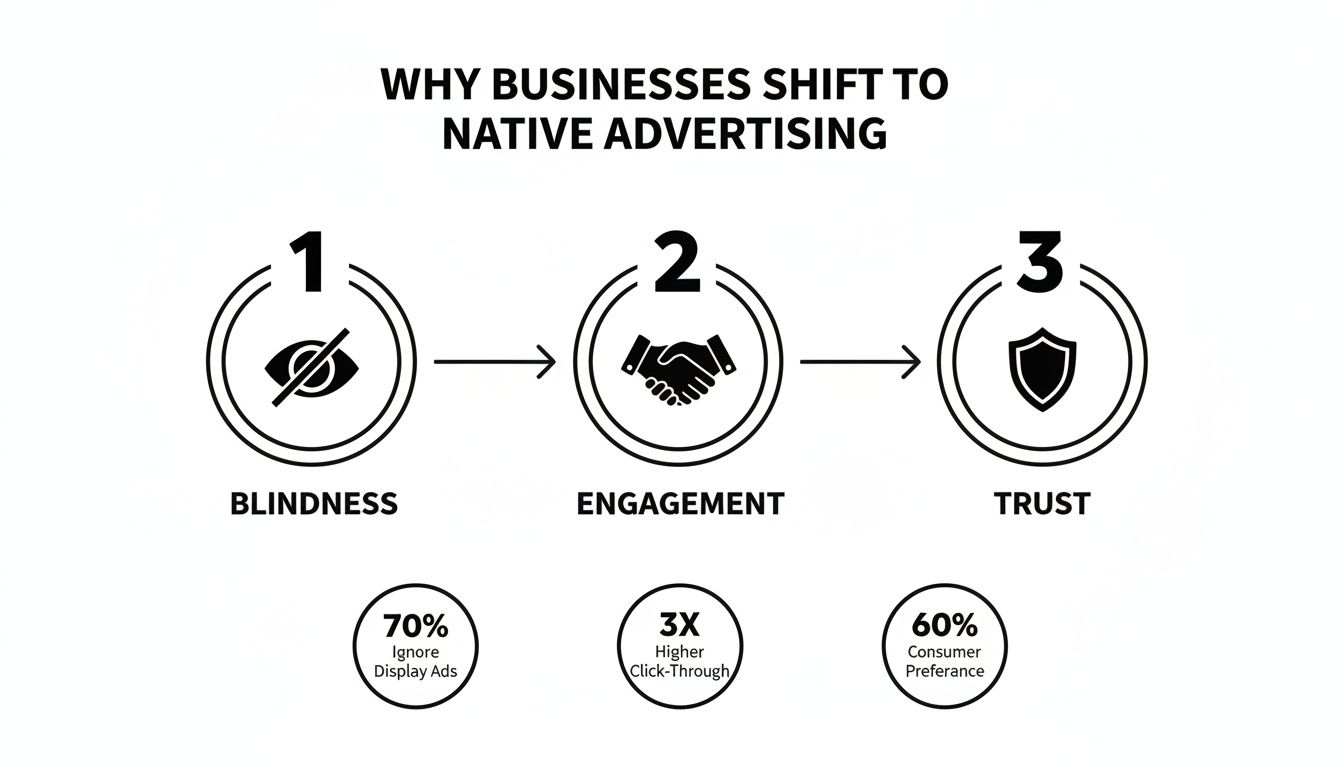
By creating ads that don't disrupt the user's experience, brands can foster genuine connections, which is what ultimately leads to stronger, more lasting audience trust.
This is the heart and soul of your native campaign. Your content has to provide genuine value and seamlessly match the publisher's established tone, style, and voice. This isn't the place for a hard sell; it's a space for storytelling, education, or even entertainment.
Key Takeaway: The best native ad content doesn't feel like an ad at all. It feels like a valuable piece of content that just happens to be sponsored by a brand.
Focus on crafting headlines that spark curiosity without being deceptive clickbait. Use high-quality, authentic visuals that look like they belong on the platform. And most importantly, make sure the content itself actually delivers on the promise your headline made.
Pulling this off involves careful planning and execution, which all falls under the broader discipline of strategic media buying. For a deeper look into this area, you can learn more about what is media buying in our detailed guide. Mastering these principles will give you a framework for building campaigns that are not only seen but also remembered.
Launching a native ad campaign is one thing, but knowing if it’s actually working is what truly matters. Success in native advertising isn’t just about racking up clicks or impressions; it’s about measuring genuine impact and proving a tangible return on your investment.
To do this, you need to look beyond those surface-level numbers and drill down into the Key Performance Indicators (KPIs) that actually line up with your core business objectives. These are the metrics that tell the real story of your campaign’s performance.
The right metrics depend entirely on your campaign goals. Tracking the wrong ones is a classic mistake that can give you a false sense of security or, even worse, make a winning campaign look like a failure.
Here are the essential KPIs you should be watching like a hawk:
Remember, native advertising often plays a critical role early in the customer journey. Its impact might not always be a direct, last-click conversion. Understanding its place in your attribution model is vital to appreciating its full value in nurturing leads over time.
You can’t improve what you don’t measure. Continuous optimisation is how you maximise your results, and A/B testing is your most powerful tool for the job. By systematically testing different elements, you can finally make data-driven decisions instead of just relying on guesswork.
The trick is to start by testing just one variable at a time to get clean, clear results. Focus on the high-impact elements first, like your headlines, images, and the call-to-action buttons on your landing pages. You'd be surprised how often a few small tweaks can lead to significant improvements in engagement and conversion rates.
By closely monitoring these core digital marketing performance metrics, you can refine your campaigns based on solid insights, ensuring every dollar is spent effectively to achieve maximum impact.

To get real, lasting success from native advertising, your campaigns need to be more than just effective—they have to be ethical. The best native ads always put the user experience first, creating a positive feeling about your brand that sticks around long after they've clicked. This all comes down to a solid commitment to being upfront and delivering quality.
The absolute foundation of this is clear and honest labelling. Nothing kills trust faster than trying to hide the fact that your content is sponsored. Using obvious labels like "Sponsored," "Promoted," or "Branded Content" isn't just a good idea; it's non-negotiable for respecting your audience and playing by the rules.
The core principle is simple: Never deceive your audience. An ethical native ad is so valuable that users don't mind that it's sponsored.
This honest approach is becoming even more critical as more money flows into the space. The Australia Native Advertising Market is tipped to grow at a healthy 15.6% each year through to 2032, showing just how important it's becoming for smart marketing strategies. You can get more details on this programmatic advertising market growth over at Renub Research.
Beyond just slapping a label on it, how you craft your content is what really makes the difference between an ad that works and one that feels right. Authenticity should be your guide for every single creative choice.
To make sure your campaigns hit the mark, focus on these key areas:
Even when the concept of native advertising feels clear, a few questions always seem to pop up when it's time to put theory into practice. Let's tackle some of the most common sticking points to help you navigate your first campaigns with confidence.
There’s no single magic number here. Your budget really depends on your industry, what you’re trying to achieve, and the platforms you decide to use. A good way to start is by carving out a small, experimental budget—think 10-15% of your total ad spend—just to test the waters with different publishers and creative approaches.
The best way to anchor your spending is to focus on your Cost Per Acquisition (CPA) goal. If you know a new customer is worth $200 to your business, you can set your bids with that figure in mind. Once you find a platform that delivers a solid return on your investment, you can start scaling up with confidence.
This is a great question, and one we hear all the time. The confusion is understandable because they work so closely together.
Think of it like this:
Essentially, native advertising is how you amplify the reach of your brilliant content marketing assets.
The two are a perfect partnership. You create something valuable through content marketing, then use native advertising to show it to a targeted, relevant audience who probably wouldn't have found it otherwise.
For a deeper dive into related marketing strategies and case studies, consider exploring Branditok's Marketing Blog for more insights.
Ready to integrate a powerful, results-driven native advertising strategy into your marketing mix? At Virtual Ad Agency, we specialise in creating and managing campaigns that build trust and drive conversions. https://www.virtualadagency.com.au

 previous